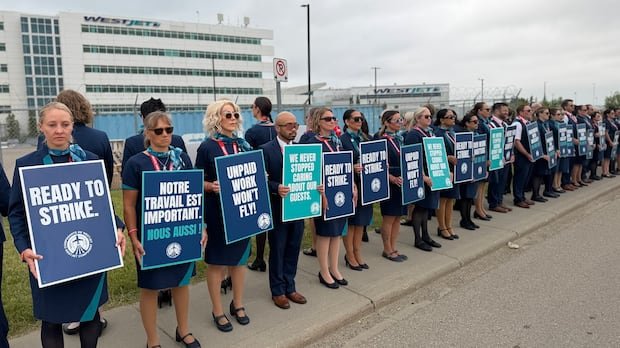

WestJet, the second-largest airline in Canada, is making preparations to gradually reduce its operations in anticipation of a potential strike by its flight attendants or a lockout. Despite this plan, the company may still avoid a labor dispute as negotiations between the union and the airline are ongoing.
According to a note obtained by CBC News, Robert Antoniuk, the Vice President of Inflight Operations at WestJet, clarified that the agreement to wind down operations is not a sign of moving towards a labor action, but rather a precautionary measure in case negotiations with the CUPE WestJet Component do not succeed.
The union members of CUPE have emphasized their desire for a fair deal without resorting to a strike. Federal mediators are actively involved in the negotiations, with Transport Minister Steven MacKinnon expressing optimism that a mutually acceptable agreement will be reached.
John Gradek, a former Air Canada director and current faculty lecturer at McGill University, highlighted the necessity for airlines like WestJet to have contingency plans in place to ensure smooth operations and avoid disruptions in the event of a labor dispute. He emphasized the importance of pre-positioning resources to prevent potential challenges, especially for international flights.
While the possibility of a strike looms, WestJet has not yet announced any flight cancellations related to the labor dispute. The airline has offered flexibility to passengers traveling during the specified period, allowing for changes or cancellations without fees.
The ongoing dispute revolves around compensation for flight attendants, with the union arguing that they are not adequately paid for all hours worked. WestJet’s pay system, based on credit hours, has been a point of contention, with the union seeking fair compensation for duties performed during what they consider unpaid hours.
This issue has been a focal point of negotiations, with the union urging WestJet to address the matter to avoid potential industrial action. The airline has defended its pay model, stating that flight attendants are compensated for all hours worked, albeit at varying rates based on duties performed.
The situation remains tense as the deadline for a possible strike or lockout approaches, with both sides striving to reach a resolution to avert disruptions for passengers and ensure sustainable labor practices within the airline industry.