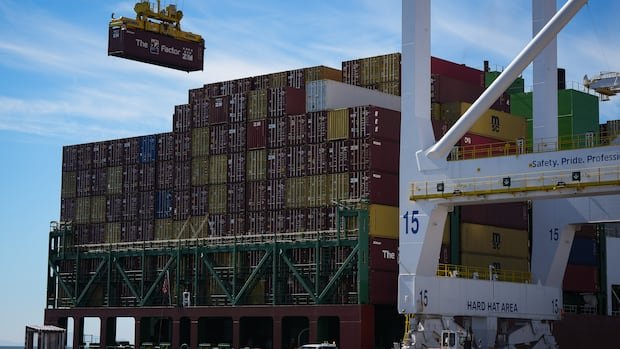

Canada is facing a critical deadline to secure a trade agreement with the United States, causing significant concern among Canadian businesses. The impending U.S. tariffs, scheduled to be imposed on Wednesday, could impact a wide range of Canadian products, including electronics, dairy, alcohol, and wood, totaling $28 billion in trade. Negotiations are intensifying as Canadian officials strive to reach a deal before the deadline, with U.S. Trade Representative Jamieson Greer playing a crucial role. The looming tariffs are causing unease for Canadian businesses reliant on American customers, with fears of decreased sales and challenges in cross-border shipping.
For companies like Northern Cables in Brockville, Ontario, which heavily relies on U.S. buyers for half of its sales, the potential 50% tariffs could result in a complete loss of business. The company’s president, Todd Stafford, expressed concerns about the devastating impact of the tariffs on their operations and the possibility of layoffs. Despite the protection provided by the Canada-U.S.-Mexico Agreement (CUSMA), the new tariffs threaten to disrupt a significant portion of Canadian trade with the U.S. affecting various sectors, including hockey equipment, flowers, and antiques.
The Canadian Federation of Independent Business (CFIB) emphasized the apprehension felt by business owners facing potential revenue losses. Cindy Baldassi, a jewelry seller from Calgary, highlighted her worries about losing half of her business due to the tariffs. The uncertainty surrounding the tariffs has already influenced business decisions, with some companies experiencing layoffs and a decline in orders. The impact of the tariff threat is evident across different industries, prompting businesses to consider alternative strategies to mitigate potential losses.
As the trade deadline approaches, Canadian businesses are bracing for the repercussions of the new tariffs. The uncertainty surrounding the trade negotiations has led to preemptive actions by some companies, such as rushing shipments to beat the deadline. The looming threat of tariffs has created a sense of urgency among businesses to adapt and seek alternative markets to sustain their operations. The potential economic ramifications of the tariffs underscore the importance of supporting local businesses and exploring new avenues for growth amidst the evolving trade landscape.