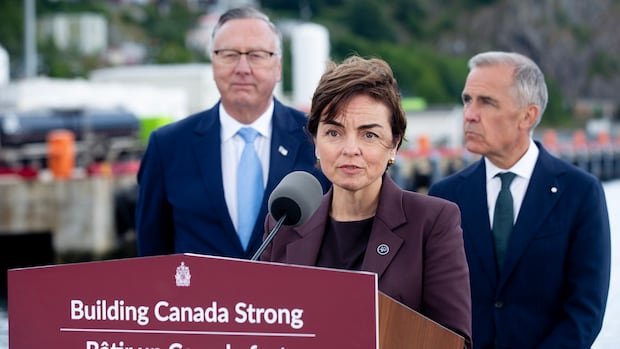

Prime Minister Mark Carney visited St. John’s on Monday to reveal a new accord concerning Churchill Falls and other electricity initiatives in Labrador, together with Newfoundland and Labrador Premier Tony Wakeham and Quebec Premier Christine Fréchette. This development is hailed as the largest investment in clean energy in North American history, valued at around $70 billion, with $10 billion in federal financing from Ottawa. The funds are earmarked for enhancing the Churchill Falls generating station, advancing the Gull Island hydroelectric project, constructing transmission lines, and establishing a 2,000-megawatt onshore wind energy project in Labrador. These enhancements will boost the current power capacity of Churchill Falls to the extent that it can supply electricity for all homes in Toronto, Montreal, and Vancouver combined.
The agreement, while significant, is not finalized yet. The framework outlined will remain in effect until March 2027, pending the signing of a definitive agreement, which the involved parties aim to accomplish by year-end. With the provincial election slated for October 5, there is a possibility of a change in government before the deal is formally sealed.
Regarding Quebec’s electricity requirements, the pact would grant access to over 10,000 megawatts, constituting more than a quarter of Hydro-Québec’s existing output. In comparison, the 2024 Churchill Falls Memorandum of Understanding, which was rejected by Wakeham post his assumption as premier, allowed for a potential of 7,200 megawatts. The electricity generated at Churchill Falls is set to be sold to Quebec at an average rate of 6.2 cents per kilowatt-hour, potentially resulting in savings of $200 billion over the agreement’s duration.
Yvan Cliche, an energy sector specialist at the Université de Montréal, deemed the deal a significant milestone for Quebec, emphasizing its benefits for the energy sector and consumers by enabling Hydro-Québec to maintain low rates. The accord signifies a victory for Fréchette, showcasing her economic acumen and reinforcing Quebec’s energy security for the next five decades, potentially creating numerous job opportunities. The deal’s timing, despite being close to the election season, was deemed appropriate by Carney, with negotiations commencing four months earlier following Fréchette’s assumption as premier.
However, not all parties are in agreement with the deal. The Innu nation leaders expressed their discontent, stressing the need for community consultation and highlighting ongoing legal issues concerning the project’s location on their traditional land. The upcoming Quebec election campaign is expected to commence soon, with Fréchette facing criticism and skepticism from opposition parties regarding the deal’s legitimacy and timing. Various political figures have raised concerns about the deal’s implications, with promises to scrutinize its impact on public finances and electricity rates if elected. Fréchette challenged the opposition parties to present alternative proposals, emphasizing the job creation and energy benefits outlined in the agreement.