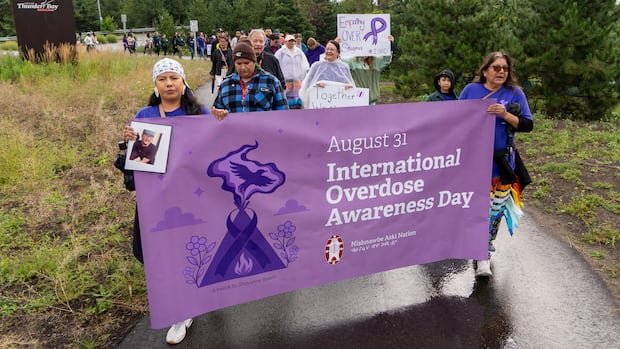

Krista Vescio, a resident of Thunder Bay, Ontario, has successfully battled drug addiction for almost 16 years, attributing her decision to quit to the loss of her sister due to a drug overdose in 2007. The tragic event propelled Vescio to seek sobriety, a journey she describes as both challenging and rewarding.
Joining numerous individuals, Vescio participated in a walk organized by Nishnawbe Aski Nation (NAN) to spotlight the pressing issue of drug-related crises. The Thunder Bay region has alarmingly high opioid-related mortality rates, exceeding the provincial average by more than five times in 2025, as reported by the Office of the Chief Coroner.
The walk, stretching approximately five kilometers from Marina Park to the Intercity Shopping Centre, culminated in an overdose awareness event hosted by the City of Thunder Bay Drug Strategy and Thunder Bay District Health Unit (TBDHU). Vescio emphasized the urgent need for enhanced resources to aid individuals seeking recovery, stressing the importance of timely support.
Anna Betty Achneepineskum, a deputy grand chief with NAN and a Marten Falls First Nation member, has been a vocal advocate for increased assistance in Thunder Bay. She highlights the necessity for sustained funding for agencies directly assisting those impacted by addiction, underscoring the inadequacy of existing detox centers and the vital requirement for post-recovery support and housing.
With local elections approaching, Achneepineskum urges the upcoming council to prioritize solutions to address the city’s drug crisis. The Thunder Bay district recorded 61 opioid-related deaths in the past year, prompting Kandace Belanger, a manager at TBDHU, to emphasize the human aspect behind these statistics, emphasizing the profound impact on families and communities.
Belanger underscores the significance of events like International Overdose Awareness Day in fostering open dialogues on addiction and available services. She also highlights the accessibility of free naloxone kits, crucial for reversing opioid overdoses, through pharmacies and health units. Belanger stresses the importance of providing a supportive environment for those grieving overdose-related losses, advocating for community solidarity in these challenging times.
Elaine Keesick and Marilyn Keno, both from North Spirit Lake First Nation, participated in the walk to honor loved ones lost to addiction and show support for those currently struggling. Keesick’s message of solidarity to individuals battling addiction resonates with the overarching theme of community support and encouragement for those seeking recovery. Vescio echoes these sentiments, emphasizing perseverance, hope, and the unwavering value of familial love and support in overcoming addiction.