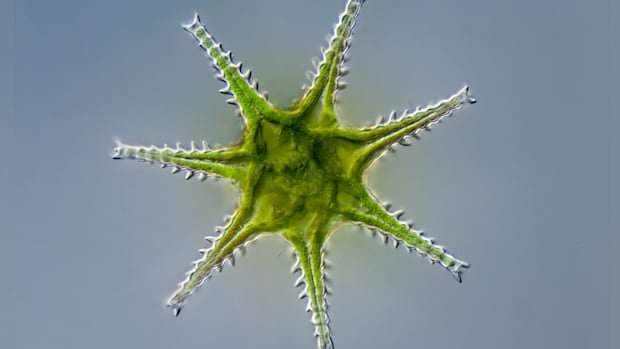

A rejuvenated forest can appear tall, dense, and verdant. Revived wetlands can hum with insects and flutter with birds. However, upon closer examination, scientists have discovered that some of the tiniest inhabitants, such as certain mosses, lichens, algae, and fungi, are often still absent.
Restoring ecosystems like forests and wetlands can aid in saving declining species of animals and plants and support their populations in recovering. Yet, recent studies reveal that not all species return at the same pace. Some of the smallest, least conspicuous residents may remain scarce or missing for decades, potentially impacting other species.
Ellen Macdonald, a botanist at the University of Alberta, has dedicated her career to studying forests, focusing on the minute flowers, mosses, liverworts, and lichens that thrive in their shadow, among their roots, or on the rough surfaces of their bark.
Macdonald emphasized the vast number of species present in these ecosystems compared to tree species. She noted that to truly recognize what might be absent in a regrown forest, one would need to gather data.
In a recent study published in the journal Nature Sustainability, Macdonald combined her research with global data to investigate the recovery time of plants and animals as boreal forests regenerate post-clearcutting. The research indicated that birch and aspen forests and their inhabitants seemed to recover within 25 years, whereas conifer forests took significantly longer. In conifer forests, understory plants, particularly lichens, mosses, and liverworts, required 85 years or more to reestablish, with some species still missing even after a century.
The phenomenon of missing species is not exclusive to boreal forests. Researchers studying restored wetlands and other habitats have observed that while these areas may appear healthy, some less visible species remain absent, indicating a silent form of loss.
Viktoria Wagner, an associate professor at the University of Alberta, described this decline as “dark diversity,” where species vanish from many former habitats, reducing the species richness at specific sites.
This decline in diversity can have unseen consequences. Algae, for instance, play a crucial role in global photosynthesis, contributing significantly to oxygen production and food availability on Earth. Wagner emphasized that as diversity declines, it can have cascading negative effects on other species within ecosystems.
Understanding these recovery patterns can guide landscape management strategies to better preserve species diversity. Macdonald suggested that selective or partial harvesting of conifer forests might be more beneficial than clearcutting, based on the research findings.
Algae habitats worldwide are facing threats, along with the species that inhabit them. Michael Melkonian, a German botanist, collaborated with colleagues to collect and cultivate over 5,000 algal strains, forming what he calls an “algal zoo” to safeguard these species.
Wagner emphasized the ongoing loss of species and the need for proactive measures to preserve biodiversity by maintaining and restoring sufficient habitat across landscapes for species to thrive.
This series of articles sheds light on scientists’ efforts to study disappearing species groups that often go unnoticed, highlighting their importance and impact on our environment, and exploring solutions to ensure their conservation.