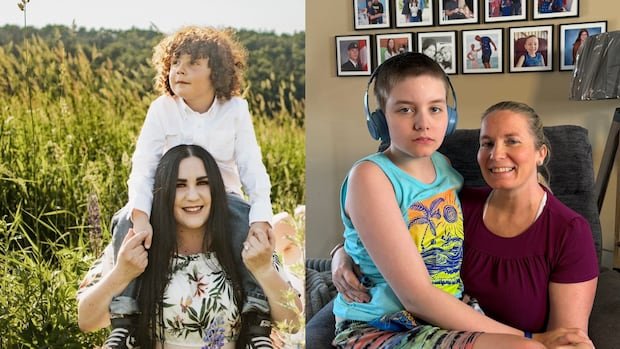

Chrystal Venator has implemented numerous security measures at her residence, including surveillance cameras, specialized door locks, and a doorbell to monitor movement. These precautions are not intended to keep strangers out but rather to prevent her autistic and non-verbal son, Stalen, from wandering off unexpectedly. Stalen’s lack of awareness of safety poses a significant risk, as highlighted by Venator, who emphasized the swift nature of potential dangers. She stressed that a momentary distraction, like attending to household tasks, could lead to Stalen unlocking doors and venturing outside without notice, prompting a frantic search.
The tragic case of Parker Wells, an autistic and non-verbal boy from Calgary who went missing and was later found deceased, deeply affected Venator, resonating with her own fears for her child’s safety. The distressing incident prompted Venator to join the Indigo Alert Initiative, a national campaign advocating for a public emergency system similar to the Amber Alert but tailored for missing vulnerable individuals without abduction involvement.
Recognizing the urgent need for a specialized alert system beyond Amber Alert and Alert Ready, Venator and other concerned parents are pushing for the implementation of an Indigo Alert across Canada. The initiative has garnered significant support, with over 38,000 signatures on the petition and backing from political figures. Jennifer Ball, the national director of Indigo Alert Canada, emphasized the necessity of quick response in locating missing vulnerable individuals, stressing the critical nature of time in such situations.
While the provincial government of New Brunswick maintains existing alert systems, including Amber Alert and Alert Ready, Venator and advocates like Breanna Mazerolle are calling for additional measures to enhance emergency preparedness for missing vulnerable individuals. Mazerolle, a parent of an autistic child prone to wandering, launched the Every Minute Matters initiative to address gaps in local emergency response and promote proactive safety measures. She emphasized the importance of timely and effective search and rescue efforts, underlining the significance of community collaboration and preparedness in such critical situations.
Studies have shown the heightened risk of wandering among children with autism, with a substantial drowning risk associated with such behavior. Despite the lack of comprehensive data on wandering incidents in New Brunswick, advocates stress the need for tailored solutions and enhanced public education to address safety concerns for vulnerable individuals. Projects like Project Lifesaver, which provides tracking bracelets for quick location of missing persons, offer a partial solution to the challenges faced by families like Venator’s and Mazerolle’s.
In addition to technological solutions, advocates stress the importance of public education and community involvement in creating a safer environment for vulnerable individuals. Jonathan Lai, executive director at the Autism Alliance of Canada, underscores the importance of community-driven initiatives in shaping federal policies that prioritize safety, inclusion, and public understanding. As advocacy efforts gain momentum, advocates are urging policymakers to heed the voices of affected families and work towards comprehensive safety frameworks that protect all vulnerable groups.