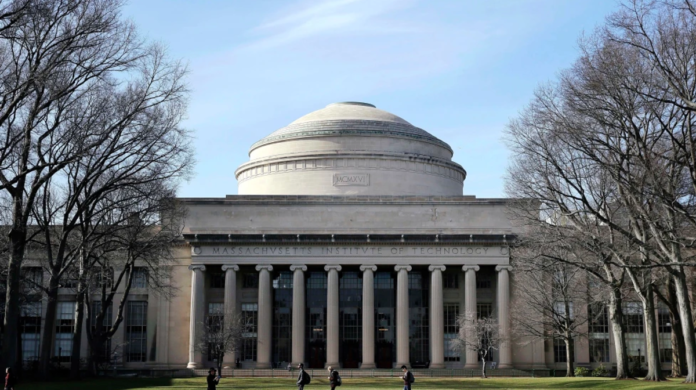

A homicide investigation has commenced following the shooting of an MIT professor at his residence in the United States. The incident occurred in Brookline, Massachusetts, where Nuno FG Loureiro, a 47-year-old physicist and fusion scientist at Massachusetts Institute of Technology (MIT), was fatally shot on Monday night. Despite being rushed to the hospital, Loureiro succumbed to his injuries on Tuesday, as confirmed by the Norfolk District Attorney’s Office.
Authorities have not apprehended any suspects as of Tuesday afternoon, and the investigation remains ongoing. Loureiro, who assumed leadership of MIT’s Plasma Science and Fusion Center in the past year, had a vision to advance clean energy technology and various research endeavors at the prominent research institution. His significant impact was acknowledged by colleagues, with Dennis Whyte, a former leader of the center, praising Loureiro’s exceptional qualities as a mentor, friend, and leader.
Having origins in Portugal, Loureiro pursued his academic journey from Lisbon to London, ultimately joining MIT in 2016 after conducting research on nuclear fusion in Lisbon. The tragic incident in Brookline coincides with a separate shooting at Brown University in Providence, Rhode Island, where two students lost their lives and nine others were injured. The FBI has indicated no apparent connection between these unrelated events.
An eyewitness, a 22-year-old student living near Loureiro, recounted hearing what seemed like gunshots on the evening of the incident, reflecting the shock and concern within the community. Students and colleagues paid their respects to Loureiro at his residence, a modest apartment within a brick building, underscoring the impact of his untimely demise. The U.S. ambassador to Portugal, John J Arrigo, extended condolences, recognizing Loureiro’s leadership and scientific contributions.
Loureiro’s profound belief in the transformative potential of fusion energy was evident in his statements, emphasizing the pivotal role of institutions like MIT in addressing global challenges. The legacy of his work and influence on energy solutions are remembered by those who knew him, highlighting the profound loss felt by the scientific community.