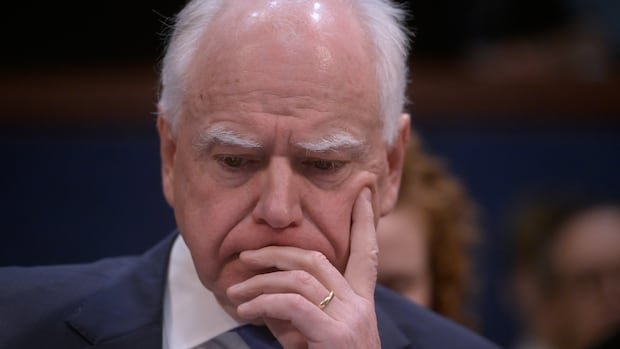

Minnesota Governor Tim Walz announced on Tuesday that the state will not be processing permits for proposed mining projects in the Boundary Waters Canoe Area Wilderness, following the lifting of a federal ban by the U.S. Congress and President Donald Trump’s administration four months ago.
The Boundary Waters Canoe Area Wilderness, located along Minnesota’s border with Canada in the Superior National Forest, is a popular destination for outdoor enthusiasts, attracting thousands of visitors annually for activities such as canoeing, kayaking, and camping.
Governor Walz, a Democrat, emphasized the importance of preserving the wilderness area in its natural state, stating, “It’s our responsibility as Minnesotans to protect this sacred place and keep it unspoiled.”
Although Governor Walz’s executive order has a limited timeframe and is set to expire in April, the next governor could potentially continue the policy. Currently, there are no immediate mining projects underway in the area, but Twin Metals Minnesota LLC, a subsidiary of Antofagasta Minerals based in Chile, has been exploring mining opportunities for copper, nickel, and other valuable metals in the national forest since 2019.
Concerns have been raised about the potential environmental impact of mining activities on the Boundary Waters Canoe Area, particularly in relation to water pollution. Governor Walz’s order also directs the Minnesota Department of Natural Resources to develop legislation that would prohibit nonferrous mining in the Rainy River watershed, which is connected to the Boundary Waters.
The decision to halt the processing of mining permits comes in response to a resolution signed by former President Trump, which overturned a federal moratorium on mining in the forest to promote economic growth in the mining sector. However, Governor Walz’s order ensures that Minnesota regulators will not participate in federal environmental reviews related to nonferrous mining in the region, and the state will refrain from issuing permits for mining projects during ongoing litigation over state mining regulations.
Despite criticism from Republican U.S. Rep. Pete Stauber, who accused Governor Walz of jeopardizing the livelihoods of northern Minnesota residents, advocacy groups like Save the Boundary Waters have praised the governor’s stance on protecting the wilderness area. Becky Rom, chairperson of the group, highlighted the incompatibility of copper mining with the preservation of the Boundary Waters and lauded the governor’s efforts to safeguard the region’s natural resources.
Legal experts, including University of Minnesota law school professor James Coleman, suggest that Governor Walz’s order introduces uncertainty for potential mining projects due to the interplay between state and federal approvals. The long timeline for project completion and the influence of changing political landscapes at both levels of government further complicate the prospects for mining ventures in the Boundary Waters region.