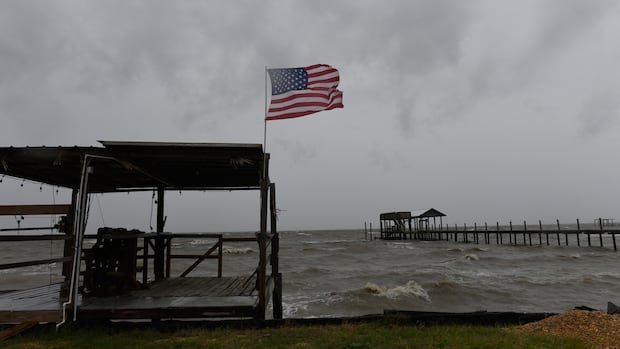

Hurricane Isaias made landfall on the U.S. Gulf Coast as a powerful Category 2 storm, causing widespread damage in Alabama and the Florida Panhandle with strong winds, heavy rainfall, flooding, and potentially life-threatening storm surges. The storm hit near Destin, Florida, with winds reaching 105 mph before slightly weakening. Officials urged residents to stay indoors and warned of flash flooding across the region.
Areas along the Gulf Coast, famous for their sandy beaches and seaside establishments, experienced hurricane-force winds and the risk of tornadoes. Reports of downed trees and power lines emerged in Mobile, Alabama, while a boil-water notice was issued in parts of Florida. Over 400,000 customers in Florida and Alabama were left without electricity.
Residents in Panama City, Florida, took precautions by filling sandbags to protect their homes from the storm. Concerns heightened over an expected storm surge of up to 9 feet, particularly threatening Pensacola Beach and the Gulf Islands National Seashore. Many locals, like Anne Petzold in Gulf Breeze, prepared for the storm by securing their properties and seeking community support.
The National Hurricane Center warned of hazardous conditions in the western panhandle, southern Alabama, and southern Mississippi, leading to mandatory evacuations in some areas and a curfew in Mobile, Alabama. Notably, numerous Waffle Houses in the Florida Panhandle closed in response to the storm, reflecting the severity of the situation. Governor DeSantis advised residents to brace for disruptions in power supply, fuel availability, and transportation services.
The National Guard mobilized troops and search and rescue teams for assistance, with some prisons evacuating inmates as a precautionary measure. Isaias was projected to weaken to a tropical storm by Saturday, but heavy rainfall was expected to persist, potentially causing significant precipitation from southern Alabama to southwestern Georgia throughout the weekend.