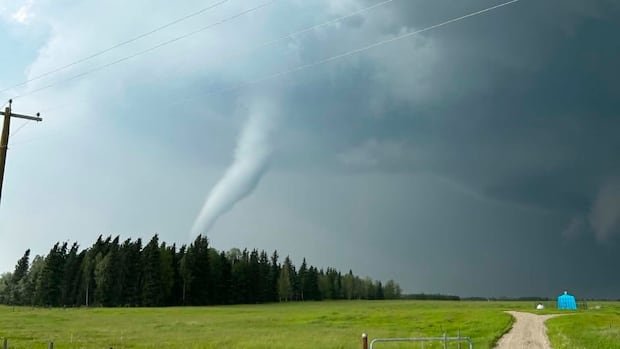

Environment and Climate Change Canada (ECCC) has introduced an enhanced warning system for tornadoes and severe thunderstorms to provide more precise alerts regarding severe weather conditions. The Convective Alert Modernization (CAM) system enables forecasters to issue targeted alerts for specific areas expected to experience extreme weather events. ECCC has confirmed the system’s implementation, allowing for quicker and more accurate dissemination of information to the public.
The new system allows forecasters to define warning areas using ‘free-form polygons’ based on anticipated threats, focusing on where severe thunderstorms and tornadoes are likely to occur. This targeted approach, utilizing simplified and automated processes, ensures Canadians receive prompt and detailed alerts when facing time-sensitive weather situations.
Previously, alerts were issued for larger, predetermined zones, potentially leading to unnecessary warnings in areas unaffected by storms. The adoption of the polygon system, already in use in the United States since 2007, aims to align warnings with meteorological data to accurately forecast impacted regions.
Despite the system’s effectiveness in reducing false alarms in the U.S., one limitation is the current delivery of targeted alerts solely through mobile networks and the WeatherCAN app, while radio and television broadcasts continue to rely on the older system due to larger broadcast regions.
Recent instances of red tornado warnings in northwestern Ontario this summer highlight the importance of accurate and timely alerts. Gordon Howard, Kenora’s director of emergency services, emphasized the significance of maintaining public trust in the warning system to prevent desensitization and ensure that alerts are issued only when necessary. The upgraded system aims to strike a balance between providing timely warnings and avoiding alert fatigue among the public.