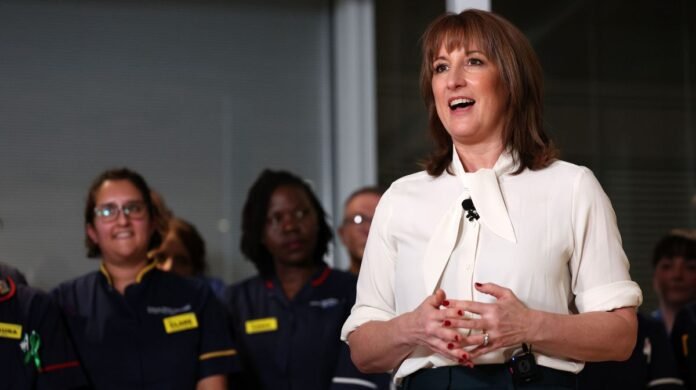

Rachel Reeves unveiled a series of measures in the Budget aimed at helping struggling households, funded by a tax increase of £26 billion. Despite an early blunder by the Office for Budget Responsibility, Reeves remained resolute in her commitment to alleviate financial burdens on ordinary citizens by addressing energy bills, wages, rail fares, and fuel costs.
The Chancellor’s pledge to reduce the cost of living was met with cheers from Labour MPs as she announced plans to eliminate the two-child benefit limit imposed by the Tories, lifting 450,000 children out of poverty. Additionally, Reeves vowed to abolish the controversial “rape clause,” which required women to prove non-consensual conception to receive support.
Emphasizing her role as Britain’s first female Chancellor of the Exchequer, Reeves expressed determination to eradicate the “rape clause,” labeling it as dehumanizing and cruel. She acknowledged the impact of tax threshold freezes on working individuals but justified the need for contributions to address public finance shortfalls.
To balance the tax burden, Reeves imposed new taxes totaling over £40 billion, targeting wealthier individuals with a mansion tax on properties exceeding £2 million. She also introduced taxes on remote gaming and online betting while eliminating bingo duty starting in April.
Despite economic challenges highlighted by the OBR, Reeves’ Budget aimed to soften the blow on low-income households facing declining living standards. While facing criticism for perceived tax increases on working people, Reeves defended her approach as necessary to close loopholes and ensure a fair distribution of financial obligations.
Various stakeholders weighed in on the Budget’s impact, with the TUC praising it as a departure from the detrimental policies of previous Conservative governments. However, business leaders expressed concerns over stalled growth, cautioning that the tax changes could hamper economic progress and hinder job creation in certain sectors.
Former Prime Minister Gordon Brown lauded Reeves for her efforts to support vulnerable children, emphasizing the long-term benefits of ending the two-child rule. Despite differing opinions on the tax implications, Reeves remained steadfast in her commitment to balancing contributions and protecting the most vulnerable in society.