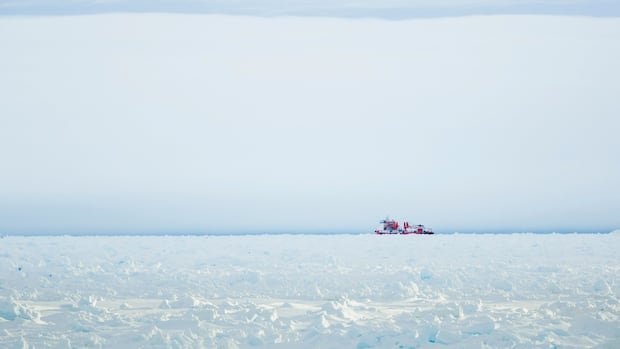

Both Canada and the United States have been discreetly monitoring the movements of two Chinese icebreaking research vessels in Arctic waters near Alaska for the past few weeks. The Xue Long (Snow Dragon) and Xue Long 2 ships entered the U.S. exclusive economic zone in the Bering Sea in July, as reported by the U.S. Coast Guard.
Concern has been growing among security and defense officials due to the consistent presence of Chinese research ships in the Arctic Ocean during recent summers. Tracking data from independent research consultant Steffan Watkins reveals that a Royal Canadian Air Force CP-140 surveillance aircraft has been in operation in Alaska since early July.
The Canadian Joint Operations Command, in coordination with American counterparts, has been actively monitoring the activities of the Chinese vessels. The Department of National Defence confirmed this surveillance effort, emphasizing that both ships are currently outside of Canada’s exclusive economic zone.
Last year, the Canadian military initiated Operation Latitude to enhance monitoring of northern waters and collaborate with allies in the Pacific, including the Bering Sea region off Alaska. The Royal Canadian Navy has deployed ships and aircraft, along with Special Operations Forces Command personnel and the icebreaker CCGS Des Groseilliers.
China has declared itself a near-Arctic state and asserts that its icebreaker deployments are solely for peaceful scientific research and environmental studies. However, concerns arise as these research ships are equipped with advanced sonar and telemetry buoys, which can also track submarine activities, according to Western defense analysts.
Canada’s participation in monitoring activities in the western Pacific is increasingly vital, especially amidst the U.S. Navy’s engagements elsewhere. The aging fleet poses limitations on Canada’s capabilities, as highlighted by concerns over the age of Halifax-class patrol frigates.
Members of the House of Commons defense committee, including Conservative defense critic James Bezan, have emphasized the need for increased surveillance in the Arctic. Investments in new destroyers, Arctic-capable submarines, and an undersea sensor network have been initiated by the federal government to bolster Arctic defense against incursions challenging Canadian sovereignty.