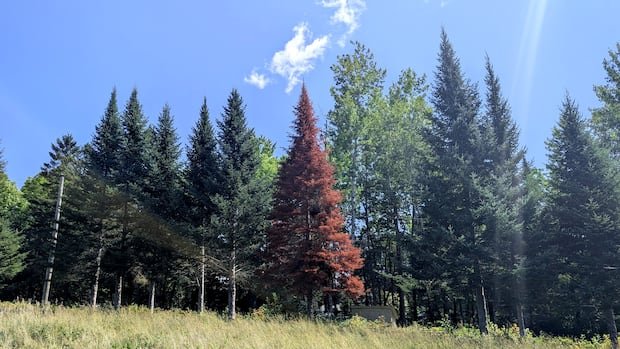

Balsam fir trees in New Brunswick are displaying a concerning trend of turning red and perishing following last year’s exceptional drought, prompting worries about the fate of this iconic provincial tree. Forestry researcher Prof. Anthony Taylor from the University of New Brunswick has been actively engaging with woodlot owners and observing the firsthand effects, noting the gradual reddening and demise of these prized evergreen trees commonly used for Christmas decorations.
Prof. Taylor, who has extensively studied the impact of climate change on New Brunswick’s forests, highlights the detrimental consequences of prolonged warm and dry conditions on the growth of balsam firs. This pattern, consistent with previous instances after hot and dry summers in 1986 and 2018, underscores the vulnerability of these trees to adverse weather conditions.
The researcher explains that during drought periods, balsam firs prematurely halt the photosynthesis process, impeding their growth and energy production essential for sustaining vital functions and defense mechanisms. This compromised state puts the trees at a heightened risk of succumbing to stressors like insects or pathogens, ultimately leading to die-offs, especially when lacking adequate reserves due to stunted growth.
Moreover, the shallow root system of balsam firs exacerbates their struggle to access sufficient water during dry spells. This challenge underscores the ongoing struggle faced by these trees as they cope with the aftermath of the drought.
Peter McKeil, a woodlot owner in Burtt’s Corner, has witnessed firsthand the impact of the drought on his balsam firs, noting a steady increase in red patches indicating ongoing tree mortality. Despite salvaging some of the fallen trees for lumber, McKeil is adapting his harvesting practices to maximize the remaining fir trees’ value before further losses occur.
Expressing concerns about the future of balsam firs in the face of escalating climate change, McKeil believes the species, particularly in southern New Brunswick, is facing an uncertain future. He emphasizes the urgent need for climate action to address the mounting challenges posed by changing environmental conditions.
Prof. Taylor views the current scenario of red-tinged trees as a clear indicator of the adverse effects of climate change on New Brunswick’s iconic balsam firs. He underscores the importance of recognizing these visible signs as a call to action, urging society to transition away from fossil fuels, preserve forests, and accelerate climate mitigation efforts to safeguard the environment and its inhabitants from further harm.