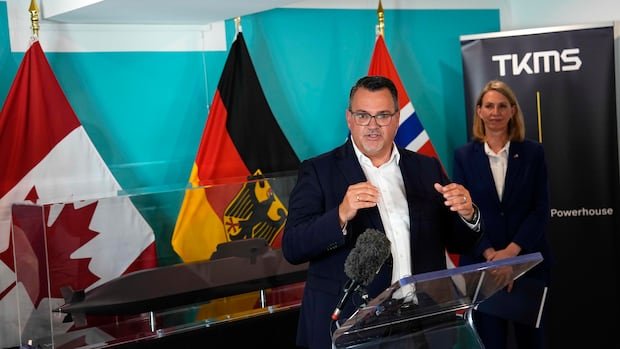

The CEO of ThyssenKrupp Marine Systems (TKMS), the German company selected to construct Canada’s new submarines, is advocating for increased collaboration among European shipbuilders. This initiative could potentially impact Canada as its navy looks into incorporating corvettes into its fleet.
In a recent interview with CBC News, Oliver Burkhard emphasized the partnership between TKMS and the Spanish government-owned Navantia S.A. The two companies are exploring joint naval projects, including the potential manufacturing of TKMS submarine designs at Navantia’s shipyards in Spain.
Burkhard highlighted the importance of cooperation among shipbuilders, noting the rising demand for warship construction globally. A report by Imarc forecasts a more than five percent increase in demand over the next decade.
In addition to the submarine project, the Canadian navy has commenced the construction of River-Class destroyers and expressed interest in acquiring smaller, cost-effective, ice-capable corvettes. Irving Shipbuilding in Halifax is responsible for building the destroyers under the National Shipbuilding Program, which is concluding the construction of Arctic and Offshore Patrol Ships.
Since Canada lacks modern submarine construction expertise, the planned 12 submarines will be built in Germany. Burkhard anticipates finalizing a contract with the German government by the end of 2027, following TKMS being named the preferred supplier for the navy’s submarines.
Regarding the potential export of TKMS designs to Canada, Burkhard mentioned considering the option of building the MEKO A-100 corvette design in Canada with TKMS design support. This concept is still under discussion and has not been formally proposed to Canadian authorities.
The Canadian navy identified the need for corvettes, with Vice-Admiral Angus Topshee advocating for smaller, powerful warships to defend the extensive Canadian coastline. Experts, including defense analyst Rob Huebert, support the development of additional ships to enhance the navy’s capabilities in potential conflicts.
Huebert lauded the growing collaboration among European shipyards, especially in submarine construction. He compared the current market conditions in shipbuilding to the formation of Airbus in the 1960s, emphasizing the potential benefits of industry-led initiatives.
The necessity for closer partnerships among European defense companies was underscored by a study from the Center for Strategic and International Studies (CSIS) three years ago. The study highlighted increased defense spending in Europe but noted a lack of cooperation among countries, framing it as a persistent issue.