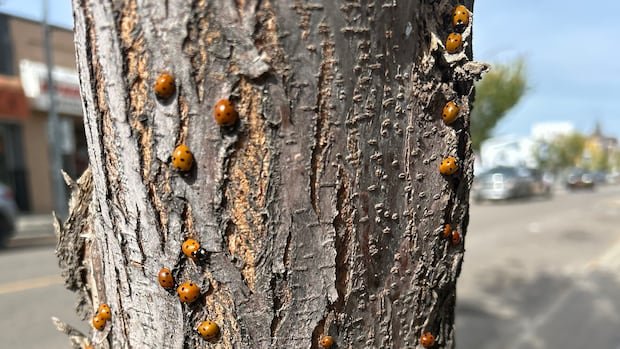

Ladybugs are abundant in Saskatchewan this month before they go into hibernation, experts say. According to Georgiana Antochi-Crihan, the City of Saskatoon’s entomologist, ladybugs experience cycles of population growth, and currently, there is a surge in their numbers. The availability of food, such as aphids, scale insects, and mealybugs, plays a crucial role in the ladybug population.
In Regina, Ashley Thompson, the manager of parks technical services for the City of Regina, noted a significant presence of aphids this year, which has likely contributed to the survival of ladybugs. A similar observation was made by Vesna Fa in North Battleford, who mentioned an abundance of aphids attracting ladybugs to the area.
Fa, the executive director of Midwest Food Resources, emphasized the importance of preserving ladybugs as beneficial insects in gardens. Candace Savage, chair of Wild About Saskatoon, highlighted the diversity of ladybug species in the province, including native and introduced varieties like the seven-spotted lady beetle.
As ladybugs prepare for hibernation, they gather in warm spots against buildings. Antochi-Crihan explained that ladybugs produce internal compounds, including antifreeze agents, to survive the winter. The ladybug population is expected to rise again in the spring when they emerge from hibernation.