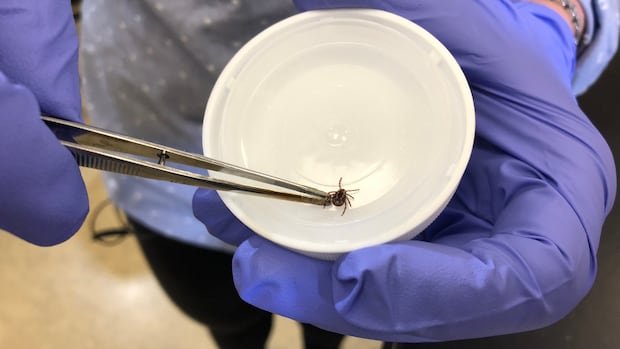

The Acadia University lab in Nova Scotia has received a $1.2 million grant from the provincial government to further its research into the prevention and management of tick-borne diseases. Nicoletta Faraone, who heads the Canadian Tick Research and Innovation Centre, emphasized the crucial role of these funds in establishing and enhancing the lab’s capabilities.
The funding will primarily support the lab’s surveillance program, which focuses on identifying the types of ticks present in the region, the pathogens they carry, and their responses to repellents and attractants. Tick-borne illnesses like Lyme disease and anaplasmosis can be transmitted to humans through tick bites, underscoring the importance of this research initiative.
With cutting-edge equipment at their disposal, the lab aims to expedite the pathogen-testing process to gain a better understanding of ticks and enhance preparedness for minimizing tick exposure. The funding, provided through Research Nova Scotia’s Focused Research Initiative, underscores the growing significance of addressing tick-borne diseases for both humans and animals.
Stefan Leslie, CEO of Research Nova Scotia, highlighted the need for research that translates into practical solutions beyond laboratory settings. The latest data from the Public Health Agency of Canada reveals a notable increase in Lyme disease cases nationally, with Nova Scotia accounting for a substantial proportion.
Furthermore, the federal government is contributing $455,000 to the project through the Atlantic Canada Opportunities Agency to support tick breeding efforts. This additional funding will enable the Acadia lab to breed ticks locally, eliminating the need to purchase them from external sources. The ability to study the genetic makeup of Canadian ticks and generate revenue by supplying specimens to researchers worldwide is a significant development in tick research.
The new breeding program at the Acadia lab is already operational, with ticks collected throughout different seasons. Faraone emphasized the importance of monitoring environmental conditions to facilitate the multiplication of tick colonies. This advancement will strengthen the lab’s research capabilities and contribute to ongoing efforts to combat tick-borne diseases effectively.