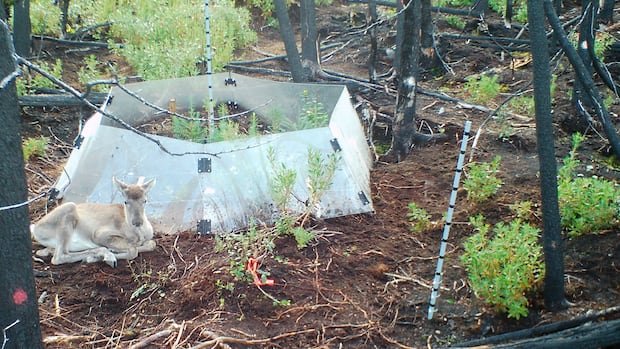

Lucas Brehaut anticipated great interest in his research, but the wildlife in Newfoundland’s wilderness had other plans. Creatures such as caribou, moose, bears, and wolves were not gentle with his equipment as he studied forest regrowth post wildfires in Atlantic Canada. Despite the challenges of difficult terrains and harsh weather conditions, Brehaut and his team persevered to investigate how forests respond to climate change-induced warming.
Employing 19 open-top chambers (OTCs) resembling mini greenhouses, they monitored seedlings’ growth under controlled temperature conditions mimicking a warmer environment. However, unexpected guests like moose, bears, and rabbits frequently disrupted their research, causing significant damage to the equipment. Even temperature sensors went missing as animals explored the sites, compelling Brehaut to spend more time searching for equipment than studying the seedlings.
Among the 19 research sites, 11 suffered damage due to wildlife interference, with some animals even grazing inside the greenhouses. Despite the setbacks, Brehaut maintained a positive outlook, acknowledging that animals were simply exploring their habitat. Kaitlyn Gaynor, a University of British Columbia professor, explained that animals’ curiosity towards novel objects in their environment, driven by potential food sources or perceived threats, is a natural behavior.
While animals disrupting research is a global phenomenon, Gaynor recounted her experiences with curious baboons and destructive elephants in Mozambique. She emphasized the importance of minimizing human scent on equipment to reduce animal attraction and advised researchers to swiftly complete fieldwork and camouflage equipment. Gaynor highlighted that animals, not electronics or theft, are the primary cause of equipment loss during research activities.
Additionally, Brehaut shared incidents where human interference, like snowmobile accidents, also impacted his research sites. Recognizing the delicate balance between human activities and wildlife interactions in research settings, researchers strive to mitigate disruptions caused by both natural and human factors.