
New Study Reveals Intricate Mechanism of Western Honey Bee Stingers
Researchers have delved into the intricate workings of the stinger of the western honey bee (Apis mellifera), uncovering its deadly efficiency in delivering venom. The latest research, recently published in the Proceedings of the National Academy of Sciences, sheds light on the unique defense mechanism of these bees.
Fiorella Ramirez Esquivel, the lead author and postdoctoral researcher at Macquarie University in Australia, expressed the novelty of being able to capture the stinger in action through high-speed cameras, a feat made possible by modern technology.
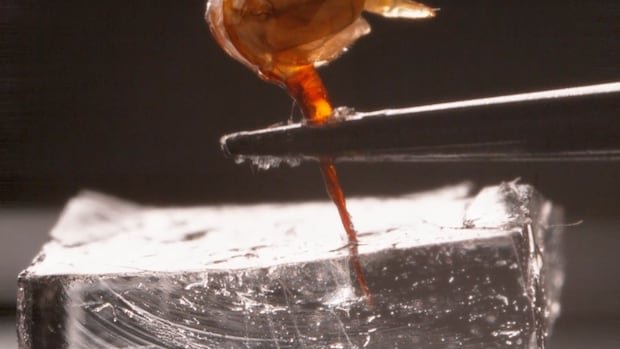
Using advanced cameras capable of capturing hundreds of frames per second, Ramirez Esquivel and her team observed the rapid action of bee stingers. By exploiting the translucent nature of the venom sac and stinger, they utilized strong lighting to highlight the intricate structures within.
Employing live honey bees for their experiments, the researchers swiftly removed the stingers and hastened the bees’ demise, as the stingers remain active for a mere two minutes post-separation from the bee’s body. Ramirez Esquivel emphasized the need for swift precision in positioning the stinger into an artificial skin substitute, with minimal margin for error.
The study unveiled a remarkable “double-piston design,” where specialized valves simultaneously drive the barbed stinger deeper into the target while ensuring a continuous flow of venom from the sac. This intricate system, likened to a complex dance of moving pistons, was meticulously recreated using 3D printing to decipher the valves’ movements.
Juliana Rangel, an apiculture professor at Texas A&M University, expressed fascination with the study’s videos, providing a deeper understanding beyond traditional microscopy images. The research revealed that the stinger’s movements can persist for up to 15 minutes, showcasing the prolonged effectiveness of the venom delivery mechanism.
The defense mechanism of the western honey bee, characterized by autotomy – the intentional detachment of a body part for defense, serves as a crucial safeguard for the colony. The sacrificial act of the worker bees, coupled with the release of pheromones from the stinger, plays a vital role in rallying other bees to defend against threats.
Despite its effectiveness, the stinging mechanism may not always be successful against tougher foes. However, the presence of barbs and the continuous penetration mechanism increase the odds of repelling attackers. The intricate workings of the honey bee stinger, as unveiled by this study, not only deepen our understanding of these fascinating creatures but also offer potential insights for medical applications.
The research not only highlights the evolutionary significance of the stinging apparatus but also underscores the intricate nature of bee defenses. The study’s findings could potentially pave the way for further discoveries in the field of entomology and inspire future research on bee species worldwide.