
Provincial wildlife authorities are pleased with the reports of uncommon canids, such as coyotes and wolves, as they work to monitor and gain a better understanding of these animals’ presence in Newfoundland and Labrador.
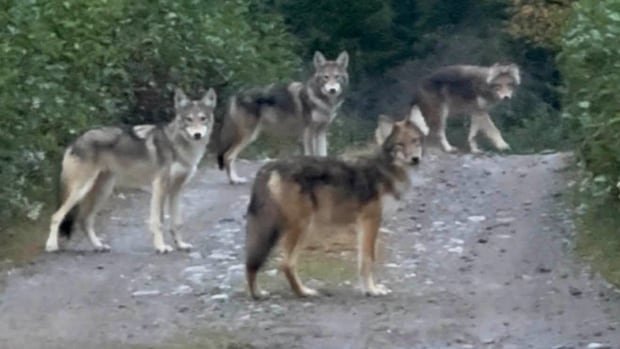
Recent attention was drawn to the possibility of wolves on the island when Nikita Compton shared online images of a small group of animals near Goose Arm, sparking curiosity about whether they were a hybrid of coyotes and dogs or even coyotes and wolves.
Wildlife officials clarified that identifying the animals without testing is challenging but expressed the desire to enhance their knowledge of the canid population in general.
The Department of Forestry, Agriculture, and Lands of the Government of Newfoundland and Labrador, responsible for the Wildlife Division, revealed that a Newfoundland wolf, believed to be distinct from the Labrador wolf, is considered extinct since the 1930s. However, Labrador gray wolves have more recently been observed on the island, with initial sightings in 2008 and 2012.
Since 2013, the Wildlife Division has been studying the movement of these animals. Genetic testing on about 500 canid carcasses in the province has revealed that while five animals had a mix of coyote and domestic dog ancestry, four animals from the island were confirmed as Labrador wolves. Additionally, 28 samples showed evidence of wolf DNA.
The province mentioned that the wolf population on the island is low, with genetic evidence indicating interbreeding with coyotes. Despite the interbreeding, the wolf genetics are likely to remain diluted due to the larger coyote population. The staff emphasized the challenge of determining the genetic background of a coyote based solely on appearance, as coyotes exhibit natural diversity in size, color, and body proportions.
Hunters and trappers are encouraged to submit coyote and wolf carcasses for research purposes, aiding in understanding the impact of coyotes’ presence on the island and the potential migration of wolves from Labrador. Efforts are also underway to increase the number of canid samples from Labrador to enhance the detection of animals with wolf genetic ancestry.
Provincial wildlife authorities remind the public that coyotes and wolves are seldom aggressive towards humans. In the event of encountering these animals, individuals are advised to remain calm, avoid running, and make noise to deter the animals. It is recommended to wave arms to appear larger and slowly back away while continuing to make noise if the animal persists.
Remember to stay updated with CBC Newfoundland and Labrador by downloading the free CBC News app for push alerts and visiting their landing page for more information.