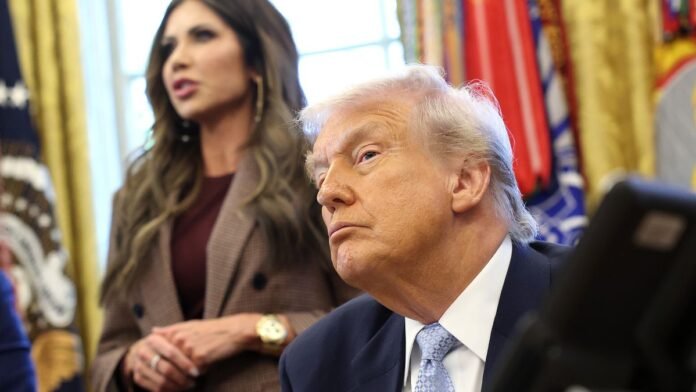

In recent weeks, Donald Trump has been exerting his influence on the global stage while operating from the Oval Office. Apart from his efforts to reshape Latin America by supporting leaders aligned with his ideology in countries like Venezuela, Honduras, and Argentina, he has also engaged in disputes with leaders in Mexico and Colombia. Trump has been vocal in his criticism of traditional Western European allies, using increasingly far-right and white supremacist rhetoric. This rhetoric draws from the controversial “great replacement” theory, suggesting that immigration poses a threat to Western culture and the white population. This raises concerns about the potential risks posed by Trump’s racist rhetoric and policies, prompting questions about when someone should challenge him.
In a recent incident, Homeland Security Secretary Kristi Noem faced heckling from protesters as she left a Congressional hearing. During the hearing, she was confronted with questions about various immigration issues, including the approval of asylum for an individual involved in a fatal shooting. The session took a heated turn when accusations were made against Noem regarding the approval process under the Trump administration. Additionally, concerns were raised about the treatment of individuals by the immigration system, highlighting the need for a review of such cases.
Campaigners have submitted a complaint to Ofcom regarding a fawning interview with Donald Trump on GB News. The interview was criticized for not challenging Trump on statements denying climate change, disparaging immigrants, and making unsubstantiated claims about crime in London. The campaigners argue that the interview breached impartiality rules and failed to hold Trump accountable for his controversial remarks.
Mike Lindell, known for his conspiracy theories and controversial statements, has announced his candidacy for Governor of Minnesota. Lindell, a vocal supporter of Trump, has been embroiled in legal disputes over defamation allegations. The US government recently dropped a case related to corruption in the FIFA scandal, raising questions about potential connections to Trump’s pardon decisions.
In another development, ICE agents faced criticism for wrongfully detaining a US citizen based on his appearance. The incident sparked outrage and accusations of racial profiling, with the victim recounting the ordeal of being forcefully taken into custody. Trump’s racially charged speeches targeting the Somali community in Minnesota have further amplified concerns about discriminatory practices and policies.
The US administration’s decision to introduce a “Gold Card” program for US citizenship drew comparisons to the UK’s former Tier 1 investor visa. The move has raised questions about the implications of such programs and their impact on immigration policies. Amid escalating tensions with Venezuela, the US seized an oil tanker off its coast, prompting accusations of piracy and allegations of ulterior motives.
Trump’s involvement in a potential takeover bid for CNN has stirred controversy, with concerns raised about media ownership and influence. The bid, backed by investors including Trump’s son-in-law Jared Kushner, has sparked debates about the future of the news organization. Trump’s critical comments about CNN and his support for changes in its leadership have added to the speculation surrounding the bid.
As developments unfold, scrutiny of Trump’s actions and policies remains crucial to ensure accountability and transparency in governance. The interactions between Trump and various sectors, including media, immigration, and international relations, underscore the ongoing challenges and controversies surrounding his administration.