
Lady Gaga wowed a capacity crowd of 23,000 at the Manchester Co-op Live Arena this week with her exceptional talent and high energy. In contrast, a few miles away, another figure, once revered but now a distant memory, left a lackluster audience yearning for bygone times.
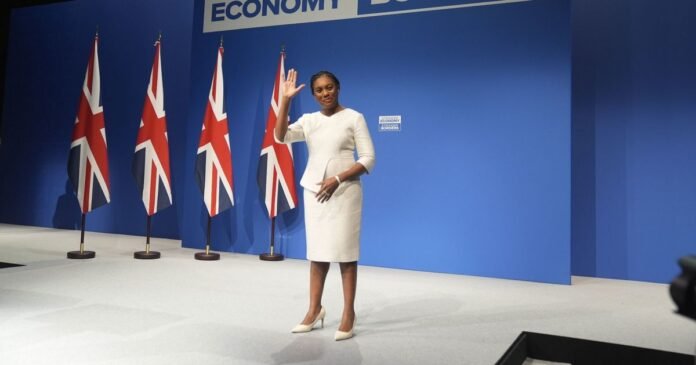
The spirit of Lady Thatcher loomed over this year’s somber Tory conference like a ghostly presence. The venue featured displays of her iconic power suits in glass cases, a large mosaic depicting her likeness, and even a dedicated Thatcher Theatre. Attendees could purchase various Thatcher-themed merchandise, and nearly every speaker nostalgically referenced her past achievements.
The adoration for Thatcher bordered on obsession, with her passing twelve years ago adding a morbid element to the proceedings. The speeches, epitomized by Chris Philp’s failed attempts at humor, elicited cringes from the sparse audience. The overall messaging suffered further embarrassment when a typo on complimentary chocolate bars misspelled “Britain” as “Britian.”
Faced with dismal polling numbers, opposition leaders scrambled to propose impractical and unfunded policies in a desperate bid to regain popularity. The proposed measures included controversial plans to target liberal judges, cut foreign aid, restrict human rights, and conduct mass deportations of immigrants, among other drastic actions.
The party’s shift towards extremist rhetoric drew comparisons to the divisive strategies of former US President Donald Trump, raising questions about their lack of action during their fourteen years in power. Criticism was also directed at their vague promises to “take back the country,” prompting reflections on past failures such as the austerity measures and Brexit debacle.
The week’s most memorable remarks came from Robert Jenrick, a controversial figure within the party, who exploited a visit to Handsworth in Birmingham for political gain by making racially charged comments. The internal turmoil within the party was evident, with predictions that current leaders may soon be replaced by more extreme figures, signaling a potential downfall for the party.
As the Tories cling to a glorified past and ignore their recent failures, their credibility and future prospects appear bleak. The party’s refusal to acknowledge their mistakes and reliance on outdated ideologies may ultimately lead to their downfall, with many within their own ranks realizing the dire situation and seeking alternatives, like aligning with Nigel Farage.
In the face of mounting challenges and internal dissent, the Tories risk being relegated to the sidelines of history due to their hubris, deception, and detachment from reality. The current political landscape suggests a shift towards more extreme elements, leaving the party at a critical juncture where change is not just necessary but inevitable.