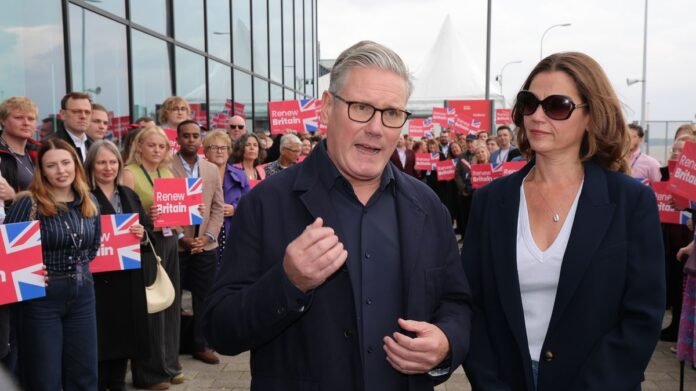

Keir Starmer is facing challenges from both Nigel Farage and Andy Burnham, positioning himself as a defender of British values by denouncing Farage’s deportation plan as racist. Starmer’s shift towards a “politics of patriotic renewal” contrasts with Farage’s “politics of predatory grievance,” as he emphasizes a vision of a “nation of neighbors.”
While Starmer’s delayed response to confront Farage’s views raised concerns, he is now in a stronger moral and political position. Burnham’s bold declaration of his ambitions to replace Starmer at the Labour conference in Liverpool was viewed as overly aggressive by some party members.
Critics of Burnham acknowledged the validity of his arguments for a more engaging vision for Labour, highlighting policy proposals such as wealth tax and public ownership. However, disrupting the conference dynamics may not have resonated well with all attendees seeking a Left-wing political festival experience.
Starmer’s future hinges on his ability to elevate Labour’s fortunes in the coming year, as internal and external pressures mount. The battle against Farage’s divisive rhetoric and Burnham’s leadership aspirations underscores the high stakes involved, beyond just the question of who will be the Prime Minister.
Concerns over the fate of the Lindsey plant in North Lincolnshire, and the government’s selective approach to supporting industries, have drawn attention. The Unite union’s lobbying efforts in Liverpool and the need for concrete actions to support struggling sectors reflect broader debates within the political landscape.
In a separate incident, Conservative MP Chris Philip’s criticism of a taxi company’s profits from ferrying migrants sparked controversy. The public discourse around immigration policies and governmental contracts has raised questions about accountability and transparency in decision-making processes.
As the political landscape evolves, the focus remains on policies that directly impact people’s lives, such as healthcare, job rights, and education. The challenge for leaders like Starmer is to ensure that meaningful reforms take precedence over political posturing and distractions.
The ongoing tensions between different political factions underscore the need for clarity and unity in addressing critical issues facing the country. The intersection of personal ambitions, party dynamics, and national interests shapes the narrative of the evolving political landscape in the UK.