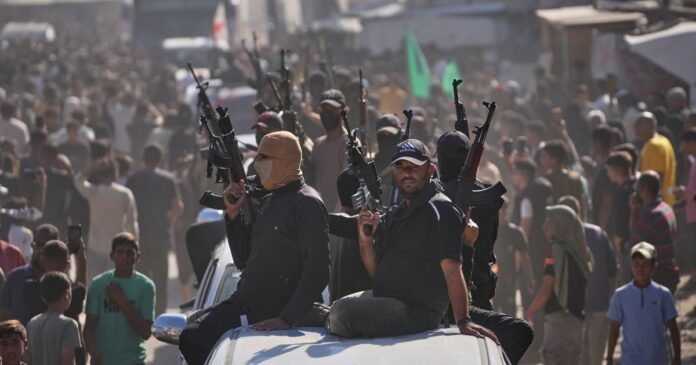

Hamas, despite facing isolation, remains armed, necessitating its disarmament for sustained peace. Regional nations like Egypt, Saudi Arabia, UAE, Morocco, and Turkey concur on the urgency of Hamas relinquishing its weaponry and control in Gaza.
Internal conflicts between Hamas and rival factions must be resolved for the implementation of US President Donald Trump’s peace initiative. A non-political Palestinian entity overseeing reconstruction and governance offers hope for a revitalized Gaza, emphasizing the need for swift progress.
To instill confidence in Palestinians, visible reconstruction efforts are crucial to demonstrate a promising future for the region. However, uncertainties persist regarding the timeline for Gaza’s redevelopment and the process of de-radicalization.
Israel faces the challenge of exhibiting restraint amid potential provocations from Iran and its allies in Iraq, Lebanon, and Yemen, who have faced severe Israeli reprisals. The Arab world’s patience with Hamas has waned as the group refuses to acknowledge its defeat in the conflict.
Trump’s role in exerting influence over Israel, particularly Netanyahu’s military decisions towards neighboring states, is pivotal. Balancing Israel’s defense against Iran while averting large-scale conflicts remains a delicate task.
The specter of Iran’s nuclear ambitions may lead to joint US-Israeli actions against Tehran’s atomic facilities and leadership. A lasting peace in the Middle East hinges significantly on US involvement and influence in the region.