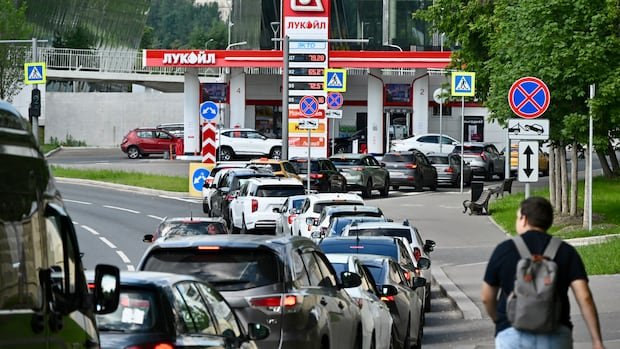

President Vladimir Putin attempted to reassure the public and discourage panic-buying on Sunday as videos circulated on social media showing long queues at Russian gas stations and altercations between frustrated drivers. Despite Putin’s efforts to downplay the severity of shortages caused by Ukrainian strikes, the Russian government has imposed restrictions such as banning gasoline and jet fuel exports and considering the importation of oil products from other countries.
The move to explore fuel imports, a rare step for Russia, reflects the significant impact of Ukraine’s sustained strikes on Russia’s refining capacity. The International Energy Agency described the disruptions caused by Ukrainian attacks on Russian refineries as unprecedented, leading to a decrease in Russia’s oil production and a significant drop in gasoline output compared to the previous year.
The fuel scarcity has resulted in fuel rationing, closure of gas stations, and lengthy queues at pump stations across numerous regions. The crisis, stemming from the ongoing conflict initiated by Moscow years ago, has triggered public frustration and a surge of social media posts highlighting the challenges faced by motorists. Amid the crisis, Russian officials are reportedly in talks with undisclosed countries to secure fuel imports, including the potential authorization for the temporary production and importation of lower-quality gasoline and diesel.
In response to the fuel crisis, regions have imposed restrictions on fuel purchases, with some areas, like Crimea, declaring a state of emergency due to gasoline shortages. The situation has led to daily struggles for drivers like Dmitry from Moscow, who faces limits on fuel purchases and uncertainty at gas stations. Dmitry’s experiences highlight the challenges faced by many motorists as they navigate the fuel crisis, exacerbated by concerns over potential intentional supply constraints and rising prices.
The fuel shortage poses another economic challenge for Russia, with experts warning that it could further strain the country’s already struggling economy. The crisis may impact the central bank’s ability to adjust interest rates and could potentially trigger broader economic downturns. Meanwhile, public sentiment in Russia reflects growing economic pessimism, with a majority of respondents expressing concerns over worsening economic conditions in their areas.
As efforts are made to address the fuel shortage and fortify refineries against future attacks, the energy industry is racing to restore operations. Ukraine’s plans to continue targeting Russian facilities as part of a 40-day operation to influence Russia’s stance in the ongoing conflict further underscore the challenges faced by both countries in the midst of the escalating crisis.