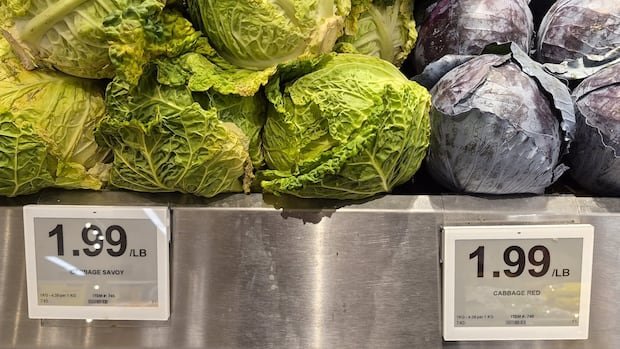

Loblaw has decided to reinstate country-of-origin information on produce signage in response to widespread customer criticism. The controversy arose when shoppers noticed that the location of food origin was missing on produce displays. Karla Hennig, a dedicated “Buy Canadian” consumer from Penticton, B.C., expressed disappointment over the absence of this information at her local Superstore, emphasizing the importance of transparency in food labeling.
While Loblaw initially removed origin details from produce signage in most provinces, including a critical period coinciding with Canada-U.S. trade tensions, they continued providing this information in Ontario and Quebec due to provincial regulations. The abrupt policy change led to backlash from customers across Canada, with many expressing their disapproval on social media platforms.
One such dissatisfied shopper, Karl Mueller from Edmonton, took action by voicing his concerns on Facebook and contacting the store’s headquarters after noticing the lack of country-of-origin labeling on produce at his local Real Canadian Superstore. Mueller, highlighting the current trade uncertainties, emphasized the significance of supporting Canadian businesses and shopping locally.
In light of public outcry and escalating trade tensions, agricultural economist Ellen Goddard predicted Loblaw would reverse its decision, which indeed came to pass following a CBC News inquiry. Loblaw acknowledged the importance of helping consumers buy Canadian products during uncertain trade times by reintroducing country-of-origin information on produce displays and implementing a symbol for U.S. tariff-affected American products.
The announcement was cautiously welcomed by some shoppers, including Mueller, who emphasized the impact of consumer activism. Mueller expressed that seeing the reinstatement of country-of-origin labeling at his local store would be the true measure of Loblaw’s policy change success.
Despite initially defending its decision citing sourcing challenges, Loblaw faced criticism for its policy change. The grocer clarified that shoppers could find source country details on individual produce stickers or by inquiring with store staff. However, some customers like Hennig found it challenging to locate this information, leading to frustration during their shopping experience.
The decision to remove country-of-origin labeling initially stemmed from regulatory issues faced by Loblaw, including fines and warnings from the Canadian Food Inspection Agency for incorrectly promoting imported food as Canadian. This scrutiny likely influenced Loblaw’s initial choice to discontinue country-of-origin labeling for produce.
While customers have called for clearer regulations mandating origin information for bulk produce, the CFIA has specified that federal regulations do not require grocers to include country-of-origin details on store signage for such products. This stance has prompted discussions on the necessity of legislation to ensure transparent food labeling practices for consumers.