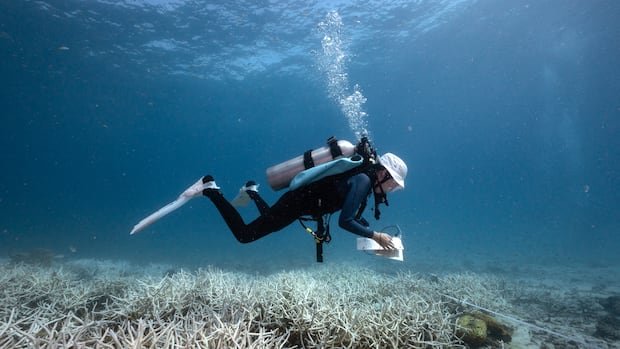

A recent global report highlights a significant decline in the percentage of living hard coral stalks on the world’s reefs. The report also indicates that the upcoming El Niño peak may be more intense than previous occurrences, as indicated by trends in coral skeletons. Marine heatwaves and global bleaching events have led to a substantial decrease in hard coral coverage worldwide, now standing at around 25 percent. This decline represents a notable shift from the higher coral cover percentages seen in the 1980s.
The report emphasizes the shrinking window for coral recovery due to the increasing frequency of extreme ocean heat events. The rate of recent coral cover decline is particularly concerning at 9.5 percent, signifying significant losses across many coral reefs globally. The impacts are attributed to climate change, as stated by experts not involved in the report.
Monitoring data spanning back to 1980 shows a consistent downward trend in hard coral cover, with declines following global bleaching events that leave corals weakened and vulnerable to disease and death. While coral reefs can recover given time, the frequency of bleaching events in recent years has hindered their ability to bounce back effectively.
Regions such as Australia, the eastern Pacific, the Caribbean, and the area from the Persian Gulf to the Arabian Sea have experienced declines in coral cover, while other regions have remained stable or even shown growth. The warming oceans, driven by human-induced climate change, pose a threat to corals globally. Enhanced monitoring efforts are crucial for a more accurate assessment of coral reef health and the development of effective conservation strategies.
Efforts to increase coral reef resilience at both global and regional levels are essential, given the crucial role reefs play in supporting marine life and economies worldwide. Urgent action to mitigate greenhouse gas emissions is emphasized as a key step in safeguarding coral reefs from further decline. The looming threat of intensifying El Niño events, compounded by climate change, adds urgency to the need for immediate and coordinated conservation measures.