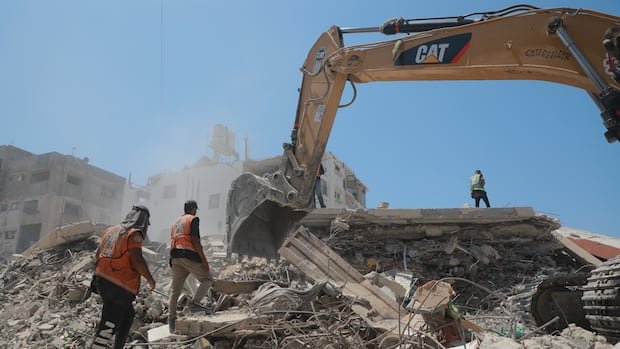

In Gaza City’s heart, members of the Al-Drimli family are tirelessly searching through the debris of their former home for a neighbor’s remains with basic tools like shovels, buckets, and a wheelbarrow. Despite the scorching midday sun, the men toil silently, their heads shielded by orange towels or hoodie hoods. The clanging of shovels on rubble and the hum of an electric saw resonate in the air.
The family has already found the bodies of their loved ones at the site and is now focusing on locating a neighbor who was present when the building was struck by an airstrike in November 2023. The Gaza Health Ministry estimates that around 8,000 to 10,000 bodies are still trapped under the rubble nearly three years after the conflict between Israel and Hamas began.
Due to the scarcity of excavators in Gaza, many Palestinians, like the Al-Drimli family, are resorting to manual labor to uncover the remains of their relatives. Ayman Al-Drimli mentioned to a freelance videographer that the high cost and unavailability of equipment have compelled them to rely on hand tools for the grim task.
Samir Sabra and his son operate two of the limited number of excavators in Gaza. Samir highlighted the significant expenses involved in running the machinery, citing the challenge of maintaining them due to the scarcity of spare parts, fuel, and oil. The ongoing difficulties have made it arduous for them to meet the escalating demand for their services.
The Palestinian Civil Defence, along with volunteers like Uday Sabra and his father, are engaged in the painstaking work of recovering remains from the rubble. However, the severe shortage of heavy machinery, compounded by the aftermath of the conflict, has significantly hindered their progress.
Mahmoud Basal, a spokesperson for the Palestinian Civil Defence, pointed out that heavy machinery in Gaza was deliberately targeted during the conflict, leading to a severe shortage that persists to this day. Despite the ceasefire agreement last year, which aimed to facilitate the entry of more equipment for clearing rubble, the situation on the ground remains challenging.
Humanitarian aid organizations have raised concerns over the Israeli restrictions on vital supplies like fuel, oil, and spare parts, impeding the maintenance and operation of crucial machinery in Gaza. This has significantly hampered the efforts to expedite the recovery process of the deceased trapped under the debris.
In light of the ongoing challenges, Uday Sabra remains dedicated to the grim yet essential task of digging through the rubble in Gaza City to bring closure to grieving families by recovering the remains of their loved ones.