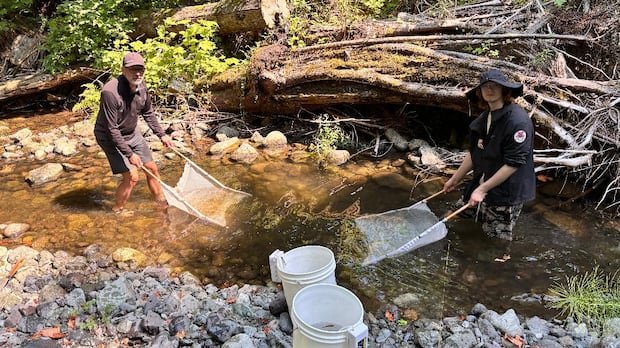

Parts of British Columbia are facing severe drought conditions this summer. In Bessette Creek, water use restrictions were imposed to protect salmon populations from dangerously low flows. Additionally, temporary protection orders were issued for the Salmon River watershed due to increased wildfire risk in the region. Bob Crandall, treasurer of the Cowichan Lake Salmonid Enhancement Society, highlighted the deteriorating conditions of streams connected to Lake Cowichan, necessitating manual fish rescues known as fry salvage.
Crandall emphasized the importance of human intervention to mitigate ecosystem challenges caused by human activities. While communities in British Columbia are supportive of these rescue efforts, scientists caution that this may not be a sustainable long-term solution. Collaborating with the Ts’uubaa-asatx Nation and volunteers, Crandall and his team relocate fish, primarily salmon, trout, and char, to areas with more water.
The changing climate has made the rescue work more challenging, with streams drying up farther upstream. The process involves using aerators, bubblers, and nets to transport fish, a physically demanding task especially during hot weather. The Ts’uubaa-asatx Nation plays a crucial role in the fry salvage efforts, utilizing drones to monitor drying streams and aiding in relocation efforts.
Michelle Corfield from the Ts’uubaa-asatx Nation emphasized the cultural and ecological significance of salmon to their community, stating their commitment to salmon conservation and restoration projects. However, similar rescue efforts in other regions, like France, are facing limitations due to unprecedented drought and extreme heat events. Jean-Pierre Faure highlighted the challenges faced in France, where fish relocation is no longer effective in the wake of severe climate events.
Faure stressed the need for long-term ecosystem restoration and water management strategies over short-term interventions like rescue fishing. He pointed out the physiological stress fish endure in warm water conditions and the high costs and limitations associated with moving fish over large distances. As climate change intensifies, focusing on sustainable solutions becomes imperative to safeguarding aquatic ecosystems.