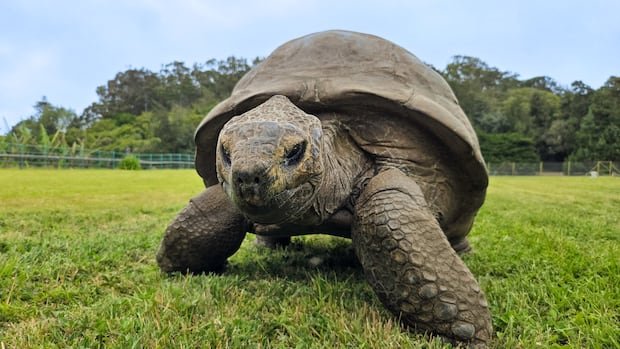

Scientists have discovered the secrets to slowing down aging in a 194-year-old tortoise. The tortoise, named Jonathan, is an Aldabra giant tortoise and holds the record as the oldest-known land animal. Through a study led by Dr. Stephen Clark, researchers delved into Jonathan’s genome to understand how he has managed to live such a long life. The findings, published in the journal Science Advances, revealed that Jonathan’s genetic activity related to gene regulation is comparable to that of a much younger tortoise, shedding light on potential longevity mechanisms.
In another breakthrough, nuclear clocks have been developed by two separate scientific teams, marking a new era in timekeeping precision. These nuclear clocks, as reported by researchers including Thorsten Schumm from the Vienna University of Technology, operate by exciting a neutron in an atom’s nucleus to a higher energy state. The enhanced precision of nuclear clocks opens up possibilities for applications across various fields, from GPS satellites to the study of dark matter.
Furthermore, the severity of wildfires is escalating, prompting concerns over their impact. A study from Simon Fraser University warns that climate change-induced wildfires in Canada could incur costs exceeding $2 trillion by the century’s end. To address this challenge, pyrogeographer Crystal Kolden is exploring nature-based solutions to mitigate the risks posed by wildfires. Kolden, an Eddie Goldenberg Research Chair of Canada in Wildfire Resilience at the University of British Columbia-Okanagan, emphasizes the urgency of finding effective strategies to protect communities from the increasing threat of wildfires.