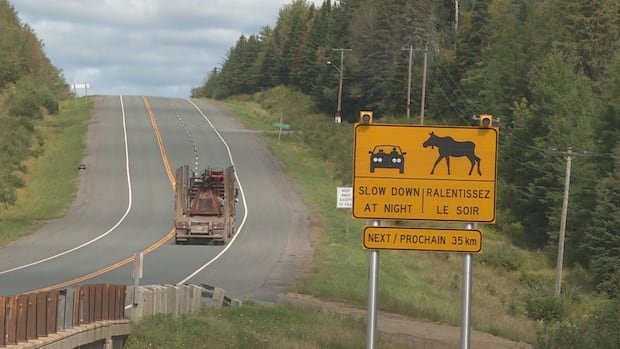

On a late August Saturday evening, the Chaleur Lightning hockey team finished an exhibition match against the Miramichi Timberwolves and boarded their bus for the journey back to Bathurst. Assistant coach Alex Ouellet recalled a startling moment when the bus driver suddenly gasped shortly after they had set off. Ouellet described seeing a figure in front of them followed by a loud impact – the bus had collided with a moose on the highway. Fortunately, everyone on board, except the driver who sustained minor scratches, emerged unharmed.
The team’s encounter with the moose left a lasting impression on Ouellet and his colleagues, similar to many others in New Brunswick who have faced such incidents. Ouellet expressed that this experience would stay with him, especially during nighttime travels. Coincidentally, that same week, the province announced plans to introduce two new wildlife crossings along that particular highway stretch.
In an effort to prevent wildlife collisions on roadways, New Brunswick employs various measures, including wildlife fencing and crossings. Transportation Minister Chuck Chiasson explained that these strategies are implemented based on collision data analysis to target high-risk areas. While extensive wildlife fencing lines both sides of 331 kilometers of highways in the province, Chiasson highlighted the importance of balancing wildlife conservation with road safety.
New Brunswick currently boasts 82 wildlife crossings, such as concrete tunnels under highways, with two recent additions on Route 8. These tunnels, over four meters tall and wide, consist of prefabricated concrete segments. Chiasson emphasized the size and functionality of these tunnels, citing their success in facilitating safe wildlife passage.
Wildlife ecologist Graham Forbes noted the efficiency of wildlife tunnels in encouraging animals to utilize them. Forbes observed various species, not just large mammals, utilizing these underpasses, highlighting their inclusive nature. Despite a lack of significant decline in collisions due to the tunnels, the Department of Transportation remains focused on enhancing road safety through mitigation measures and improved guidelines.
Looking ahead, Ouellet expressed hope for increased fencing in the area to mitigate future risks, acknowledging the challenges of preventing every collision. Reflecting on the incident, he stressed the importance of proactive measures to address wildlife-road interactions effectively.