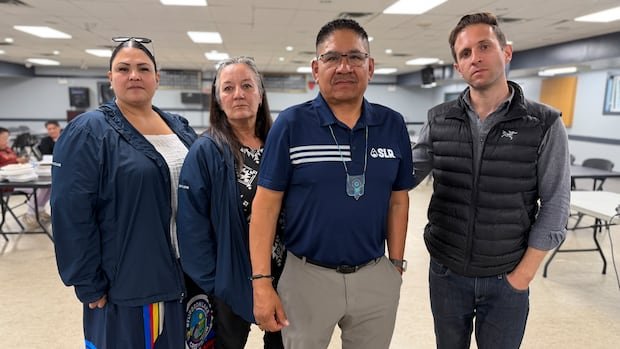

A significant turnout of band members gathered at the Sturgeon Lake Cree Nation Community Hall on Tuesday for an engagement session led by community leaders and legal advisors. The session aimed to educate residents on the potential impacts of the proposed Wonder Valley AI data centre campus on their traditional land.
Community members expressed numerous inquiries, but the company responsible for the project was notably absent at the event. O’Leary Digital’s ambitious $70 billion, nine-gigawatt facility, situated approximately 130 kilometers southwest of the SLCN reserve in the Municipal District of Greenview, was the focal point of discussion.
During the presentation to community members, SLCN lawyer Francco De Luca highlighted the project’s background, current concerns, and the various regulatory and consultative challenges that lie ahead. De Luca emphasized the importance of consultation to uphold the Crown’s Aboriginal treaty rights and adhere to regulatory processes such as the Water Act and Environmental Protection Enhancement Act, which aim to safeguard Alberta’s water and environment.
De Luca raised concerns about the project, citing the exemption of a provincial impact assessment and the ongoing judicial review concerning the project’s water license as reasons for apprehension. Issues such as heat emissions, noise, and impact on wildlife, previously addressed during O’Leary Digital’s June open house, were reiterated during the presentation.
Chief Sheldon Sunshine of SLCN expressed the community’s worries about the proposed development, situated on a 64 square kilometer area along Highway 40, within the heart of Sturgeon Lake Cree Nation’s territory where hunting and trapping activities occur. He mentioned a recent traditional camp held by his family near the proposed site, where his grandson harvested a moose, emphasizing the cultural significance of such activities being jeopardized by the project.
In a previous interview with CBC News, O’Leary Digital CEO Paul Palandjian mentioned the company’s efforts to avoid disrupting animal corridors in their site planning and their commitment to preserving wildlife in a dedicated area on their site map.