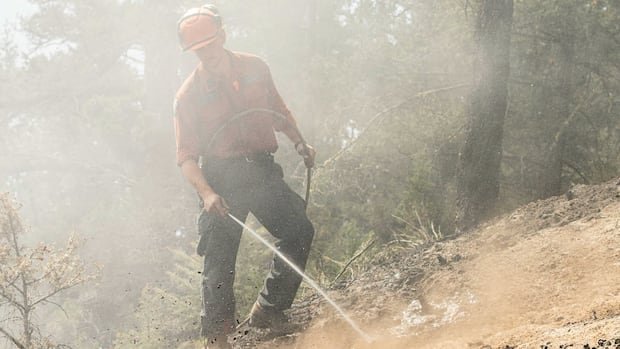

The Bald Range fire has caused damage to approximately 150 structures, as reported by the Regional District of Okanagan-Similkameen. Evacuees from Summerland and nearby areas are gradually returning, with authorities anticipating more returns soon. The B.C. Wildfire Service expects the firefighting focus to shift northwest in the face of anticipated hotter and drier conditions. Lightning strikes have ignited around 130 wildfires across British Columbia.
In a recent update, the Regional District of Okanagan-Similkameen revealed the extent of the damage caused by the Bald Range fire. Graham Statt, the Chief Administrative Officer of the District of Summerland, mentioned that around 40 of the affected structures were within the town’s borders. Efforts are ongoing to reach out to property owners to assess the situation, though the types of structures damaged remain unknown.
As more residents of Summerland return following evacuation orders prompted by the Bald Range wildfire, damage assessments have been completed. Approximately 22% of the properties under evacuation orders have now been placed on evacuation alert, with certain areas east of Highway 97 and the Trout Creek neighborhood on alert status.
While residents are gradually returning home to Summerland, Hugh Murdoch from the B.C. Wildfire Service highlighted continued efforts to address hot spots and contain the fire perimeter closest to residential areas. The focus of firefighting operations is expected to shift towards the northwest, where fires are encroaching into forested regions due to worsening weather conditions.
Despite the challenges faced by affected residents, the road to recovery is described as long. Roie Manoff, a winemaker, likened the fire’s impact to a brutal and fast-moving storm, expressing solidarity with those who have suffered losses. Connie Denesiuk, another resident, described her return home as a “bittersweet joy” amid concerns for neighbors still waiting to assess their properties.
The B.C. Wildfire Service warns of lingering smoke due to light winds in central and southern B.C., with hotter and drier conditions expected across most regions. The agency also noted air quality warnings affecting large portions of southern B.C. due to wildfire smoke. Additionally, assistance from other Canadian provinces, Mexico, and Australia has been instrumental in combating the wildfires across British Columbia.