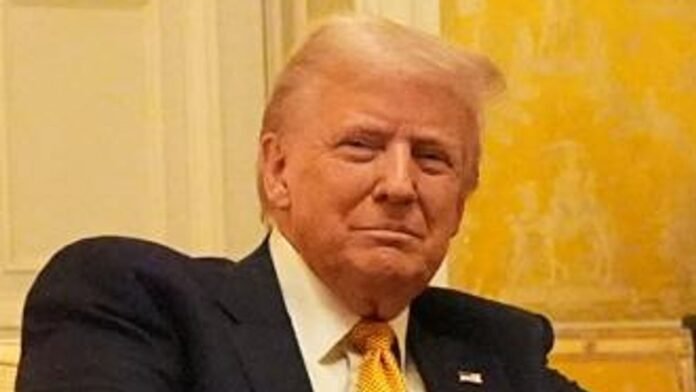

Donald Trump is presenting a facade of peace efforts in Ukraine, but upon closer examination of his inner circle, the true intentions are revealed. His purported peace initiative is not rooted in diplomacy but rather a strategic business move disguised as statesmanship, aimed at facilitating lucrative deals with Moscow for himself and his wealthy associates.
Trump’s recent remarks publicly reprimanding Volodymyr Zelensky indicate his underlying motives. By pressuring the Ukrainian leader to “get his act together” and implying that Ukraine must make concessions for the war to cease, Trump is sending a clear message of intimidation.
Furthermore, Trump’s assertion that Russia holds the advantage due to its size and his criticism of European allies for being ineffective in supporting Ukraine are not mere observations but calculated tactics to coerce Ukraine into accepting unfavorable terms that undermine its sovereignty.
Trump’s involvement in a supposed diplomatic effort centered around a contentious 28-point plan, which neither Ukraine nor Russia is likely to agree upon, raises doubts about genuine intentions for peace negotiations.
The fundamental issues at stake, including the return of seized Ukrainian territory and ensuring protection from future aggression, are vital for Ukraine’s survival but are being treated by Trump as mere bargaining chips, highlighting his transactional approach to the conflict.
Examining the composition of the negotiation teams reveals the profit-driven agenda behind the talks. Rather than seasoned diplomats or experts, Trump has delegated individuals like Steve Witkoff and Jared Kushner, who have vested financial interests, indicating a focus on economic gains rather than sustainable peace.
In contrast, Putin’s choice of Kirill Dmitriev, an investment strategist, as a key representative underscores Russia’s strategic economic objectives in the negotiations, further blurring the lines between diplomacy and business interests.
The recent discussions in Florida were not aimed at fostering peace but rather resembled a business transaction, with financial gains overshadowing genuine efforts for conflict resolution.
Trump’s pressure tactics on Zelensky and his emphasis on Russia’s perceived advantage do not align with a sincere pursuit of peace but rather indicate a push towards a deal that favors Russian territorial gains and opens up lucrative opportunities for Trump’s associates.
Coerced agreements do not equate to genuine peace but rather signify capitulation orchestrated by influential figures viewing Ukraine as a commodity rather than a nation striving for security and autonomy.
It is imperative for Ukraine to seek partners committed to its well-being rather than individuals seeking personal profits at the expense of the country’s sovereignty and stability.