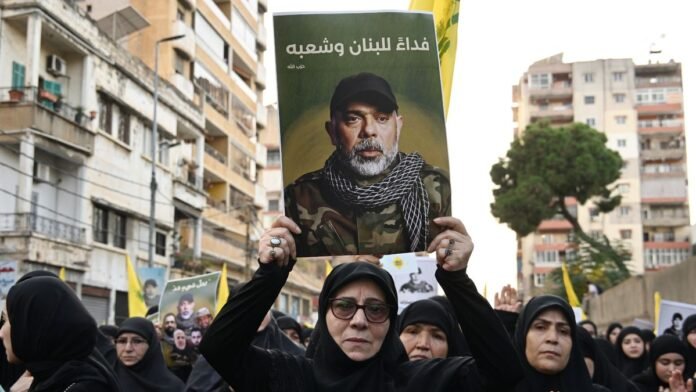

The recent airstrike on Beirut over the weekend has resulted in the death of a prominent Hezbollah member, Haytham Tabtabai, prompting concerns of retaliatory actions from the group. Israel, in defense of its attack, labeled Tabtabai as a key figure aiding in the re-armament of Hezbollah, supported by alleged substantial supplies from Iranian sponsors.
The strike, the first on Lebanon’s capital in June, claimed the lives of five individuals and left at least 25 others injured. Hezbollah acknowledged Tabtabai’s demise and warned of potential escalation of hostilities just ahead of an upcoming visit by Pope Leo XIV to Lebanon.
In response, Israeli Defense Minister Israel Katz emphasized a commitment to safeguarding the nation’s security against any threats. Meanwhile, Hezbollah’s senior official Mahmoud Qmati condemned Israel’s actions as crossing a “red line,” with the group contemplating its next move.
The ongoing conflict in Gaza has resulted in a significant death toll and numerous injuries since its outbreak in October 2023, initiated by Hamas attacks on southern Israel. In parallel, Israeli airstrikes in southern Lebanon have intensified, reflecting efforts to counter Hezbollah’s alleged military resurgence, a claim refuted by the Lebanese government.
Hezbollah, following a ceasefire, has refrained from direct attacks on Israel, with sporadic incidents labeled as warnings. The recent strike that claimed Tabtabai’s life has stirred discussions within Hezbollah’s leadership on potential responses and raised concerns about heightened violence across Lebanon.
The Israeli military’s actions, including recent sanctions on top officials, underscore a shift in command dynamics following past failures. Lebanon’s President Joseph Aoun has called for international intervention to halt the attacks and emphasized Lebanon’s willingness to engage in negotiations with Israel to end the airstrikes and disarm non-state actors.
The cycle of conflict involving Hezbollah, Israel, and other parties underscores the longstanding tensions in the region, with efforts to de-escalate and address underlying security concerns remaining a challenge.