
Most individuals find it unacceptable for the House of Lords to delay the passing of a bill after it has been approved by Members of Parliament in the Commons.
A recent survey conducted by Dignity in Dying revealed that 6 out of 10 people believe it is not appropriate for the Lords to obstruct a bill once it has been passed by the Commons, while only 17% think otherwise. Additionally, just a quarter of respondents consider it permissible for the Lords to introduce amendments that could potentially undermine the bill.
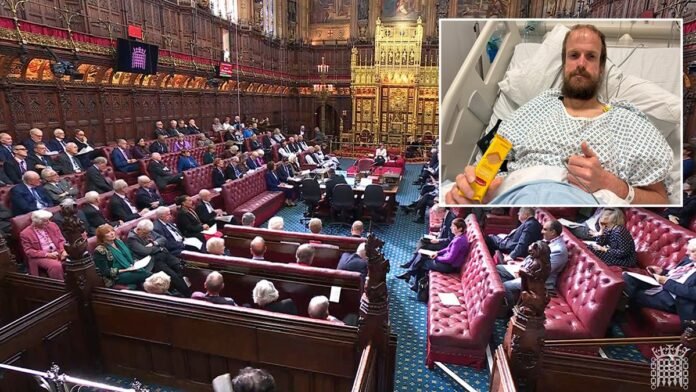
The Committee Stage commenced in the House of Lords today following the creation of nearly 1,000 amendments by the members. Criticism has been directed at the House of Lords for allegedly disrupting the progress of the Assisted Dying bill by proposing an unprecedented 942 amendments.
A terminally ill music teacher expressed deep concern over the potential blockage of the Terminally Ill Adults (End of Life) Bill due to parliamentary maneuvers, stating that it would be devastating for him and his family. With a limited time left to live, the 39-year-old emphasized the importance of a peaceful passing without unbearable pain.
Nathaniel Dye, an MBE recipient from east London renowned for his advocacy work, highlighted the urgency of the legislation, citing the current inadequacies in managing end-of-life pain. He emphasized that the bill, supported by a majority of the public, must not be obstructed to prevent further suffering for individuals like himself and their families.
A group of over 100 terminally ill individuals and their families penned a letter urging Peers to consider their perspectives and ensure that their voices are acknowledged in the decision-making process.
The ongoing debates in the House of Lords revolve around various amendments to the bill, including provisions related to pregnancy testing, travel restrictions, and the criteria for unbearable suffering due to illness.
Advocates, including Sarah Wootton, CEO of Dignity in Dying, emphasized the importance of prioritizing the needs and desires of terminally ill individuals and their families in the legislative discussions. They called for a fair and thoughtful examination of the bill, given its significant public support and previous approval by the elected Commons.
Personal stories, such as that of Louise Shackleton, who accompanied her husband to Dignitas for assisted dying due to his terminal illness, underscored the urgency for compassionate and humane change in end-of-life legislation. The emotional accounts shed light on the impact of delays and political tactics on individuals facing unbearable suffering.