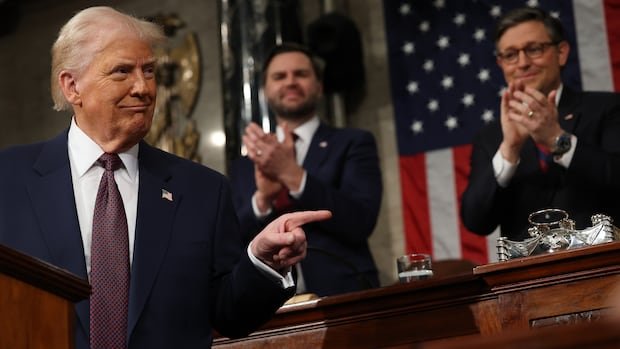

Republicans are gearing up for the upcoming U.S. midterm elections in November, facing increasing pressure to protect their majority in the House as Democrats make progress in key races. The outcome will not only determine the balance of power in Congress but also impact the ability to investigate the Trump administration, challenge its policies, and influence legislative decisions.
While a shift in Congress may not restrict the President’s actions, it raises questions about the extent of Trump’s authority. Journalists Katie Simpson, Willy Lowry, and Paul Hunter analyze the potential implications of a party turnover in Congress and the Senate on Trump’s power and its implications for Canada-U.S. trade relations.
The discussion addresses the significance of Democratic control in Congress concerning Trump’s policy decisions through executive orders rather than legislation. The process of passing substantial bills to enact policy changes is contrasted with Trump’s approach of utilizing executive orders to advance his policy priorities, especially in the absence of congressional cooperation.
Despite the potential for a change in Congress, Trump’s ability to act independently through executive orders remains formidable. His actions, such as declaring national emergencies and implementing tariffs, demonstrate his capacity to drive his agenda irrespective of the midterm election outcomes. The discussion also touches upon potential challenges, investigations, and impeachment proceedings that Democrats may pursue, highlighting the complexities of the political landscape.
Reflecting on the current dynamics, it is evident that Congress’s influence has diminished, with the court system serving as a primary check on Trump’s power. The conversation underscores how a shift in power to the Democrats in Congress may not significantly alter Trump’s strategies, as he vows to use veto power and executive orders to advance his agenda despite potential legislative opposition.