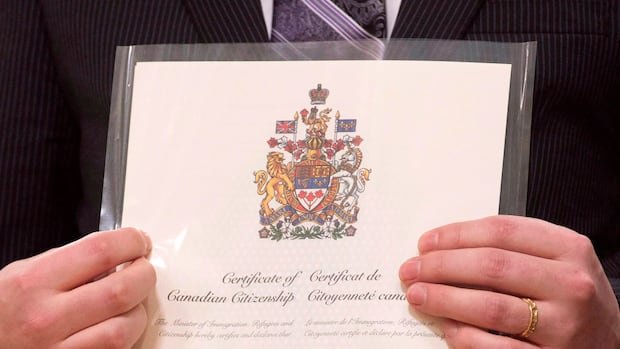

Thousands of individuals globally have been granted Canadian citizenship certificates following a recent amendment to federal legislation late last year. According to CBC News, half of these individuals are Americans. In the initial three months after the revision, Immigration, Refugees and Citizenship Canada (IRCC) issued proof of citizenship certificates to 4,075 people under the citizenship by descent provisions in Bill C-3.
This law permits individuals residing in other countries, who can trace their lineage back to Canadian ancestors, to be eligible for Canadian citizenship, even if their Canadian ancestor left Canada several generations ago. Before Bill C-3, Canadian citizenship by descent was restricted to the first generation born or adopted outside Canada to a Canadian citizen. However, this restriction was invalidated by the courts as unconstitutional.
From December 15 to March 31, the government approved 1,955 applications under Bill C-3, with 900 successful applicants born in Mexico and 140 in the United Kingdom. During the same period, IRCC approved citizenship certificates for 13,310 individuals who qualified under the previous first-generation rules, including 6,135 born in the U.S., 945 born in Mexico, and 720 born in the U.K.
A surge in requests for assistance in obtaining documents like birth and marriage certificates for ancestors has been noted this year by public records specialists and immigration lawyers. This surge is attributed to a growing number of individuals from outside Canada seeking to establish Canadian ancestry, leading to expected processing delays.
Montreal immigration lawyer Lisa Middlemiss mentioned that her office has experienced increased demand, necessitating the hiring of two associates to manage the workload. The inquiries, predominantly from Americans, are driven by various concerns, including potential changes in the U.S. political landscape.
Citizenship certificates enable recipients to relocate to Canada or obtain a Canadian passport, but they do not grant the right to vote in Canadian elections without having lived in Canada at some point. The Parliamentary Budget Officer estimated that around 115,000 individuals could be impacted by the legislative change.
IRCC spokesperson Matthew Krupovich emphasized that while the new rules broaden access to citizenship by descent, having distant Canadian ancestry alone does not automatically confer eligibility. Despite no significant increase in application volumes post-law change, the backlog has grown, resulting in longer processing times and delays, particularly for applications submitted currently.
Middlemiss expressed skepticism toward IRCC’s assertion of no significant increase in applications, highlighting the challenges of accommodating the rising demand. The recent change has left many clients awaiting responses to their applications, with urgent cases being prioritized, such as those involving study opportunities in Canada or safety concerns.