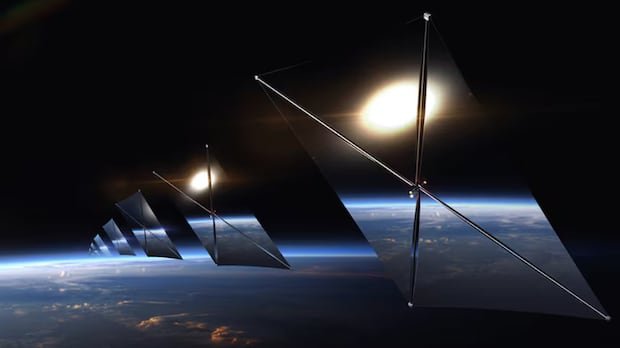

Several astronomy experts and enthusiasts in New Brunswick are adding their voices to oppose a U.S.-based company’s ambitious plan to utilize space mirrors for providing artificial sunlight to consumers willing to pay for the service. The company, Reflect Orbital, has named its project proposal “sunlight on demand” and intends to offer it as a commercial service. According to the company, this artificial “sunlight” could have various applications such as supporting agriculture, enhancing solar power infrastructure, facilitating search and rescue operations, aiding in construction projects, and providing other benefits.
Mount Allison University astronomy professor Catherine Lovekin expressed strong concerns about the project, stating, “It’s kind of a disaster.” She warned that the initiative could severely impact ground-based astronomy and backyard stargazing, which are already facing challenges due to the proliferation of satellites in orbit, with the proposed mirrors being significantly brighter.
Reflect Orbital, established in 2021, received approval from the U.S. Federal Communications Commission in July for its project, despite facing opposition from numerous members of the public.
-
Analysis
U.S. FCC approves giant space mirror to deliver ‘sunlight on demand,’ but what are the legal implications?
-
Giant mirrors in space to reflect sunlight at night? No thank you, astronomers say
The approved project involves deploying a single mirrored “demonstration” satellite, intended for testing the technology and safety measures.

Reflect Orbital aims to launch 50,000 satellites into space by 2035 to reflect sunlight back to Earth, potentially even during nighttime. Lovekin cautioned that such a large number of satellites would obscure the night sky, making it challenging for astronomical observations with large telescopes.
She highlighted the risks associated with the project, emphasizing potential disruptions to natural day-night cycles, circadian rhythms, nocturnal ecosystems, and wildlife.
Stéphane Picard, the owner of an astro-tourism organization called Cliff Valley Astronomy, echoed Lovekin’s concerns. He mentioned that New Brunswick currently boasts four dark-sky sites, locations free from light pollution that offer unobstructed views of the night sky.
Picard revealed plans to add eight more dark-sky sites to the province, aiming to make New Brunswick the province with the highest number of such locations.