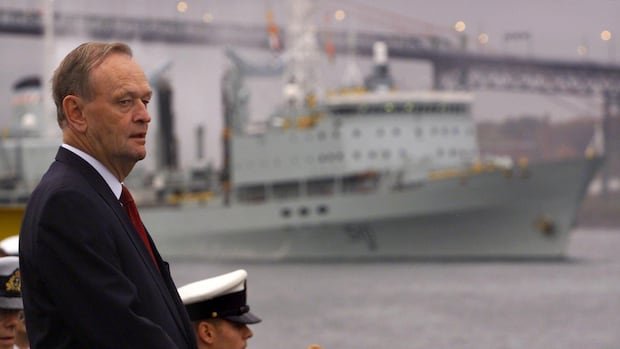

Canada, known for its opposition to the 2003 Iraq war, was making preparations to support the U.S.-led invasion by deploying naval ships if approved by the UN Security Council, as revealed in cabinet records. The minutes from the final cabinet meetings preceding the invasion indicate that the government was considering the potential UN authorization for military action, with ministers engaging in deep discussions on ethical dilemmas related to life and death.
The U.S. initiated the invasion under the pretext of disarming Saddam Hussein of alleged weapons of mass destruction, which were never found. The Bush administration framed the conflict as part of the broader war on terror following the September 11 attacks nearly two years earlier.
Prime Minister Jean Chrétien officially announced Canada’s decision not to join the U.S.-led “coalition of the willing” in Iraq on March 17, 2003, just before the commencement of the invasion. This stance was met with a standing ovation from his party during question period.
Simultaneously, the U.S. withdrew a resolution from the Security Council that would have authorized military action after facing probable defeat. Cabinet meeting minutes from February 25, 2003, obtained by CBC News through an access to information request, indicate that while the U.S.’s resolution encountered pre-introduction opposition, the Canadian government was contemplating potential military contributions.
Then Minister of National Defence John McCallum noted in the meeting that Canada, committed to a peacekeeping contingent in Afghanistan, couldn’t provide ground troops but could redeploy warships if necessary. Retired General Raymond Henault confirmed that the Canadian Armed Forces had discussed potential contributions to the Iraq war if Canada opted to participate.
Canada had naval vessels in the Persian Gulf engaged in counterterrorism and counter-smuggling operations at the time. Discussions between U.S. and Canadian officials, as revealed by a U.S. diplomatic memo published by WikiLeaks in 2011, explored the possible roles of Canadian ships during the invasion.
Although Canada did not sit on the Security Council, Chrétien emphasized efforts to bridge gaps within the Council to prevent unilateral actions that could diminish the UN’s role. Foreign Affairs Minister Bill Graham reiterated Canada’s focus on disarmament rather than regime change and advocated for broader UN resolution language.
While the decision to abstain from the war was seen as a sovereign assertion by Canada, concerns persisted within the cabinet about potential repercussions on relations with the U.S. Cabinet documents from March 18, 2003, indicated ministers’ support for the government’s position and emphasized the importance of principled leadership post-conflict and in the fight against terrorism.
Debates during the cabinet meeting delved into philosophical discussions on the justification for war and taking lives, echoing contemporary concerns about divisions among allies and the erosion of multilateralism. The emotional gravity of the decision-making process was underscored by the potential human cost and impact on families and society.