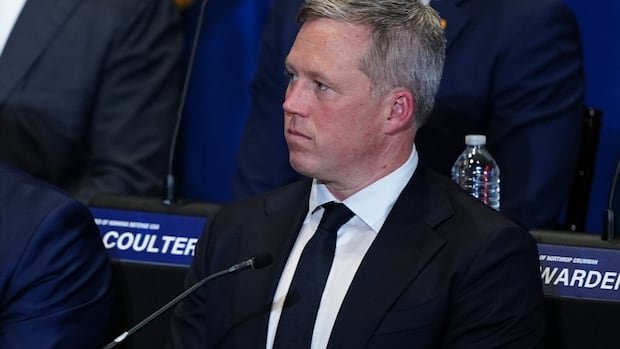

U.S. Army Secretary Dan Driscoll will be stepping down from his position after serving for 18 months, as confirmed by the White House on Monday. This marks another high-level military leader’s departure during President Donald Trump’s second term. Although the reason for Driscoll’s departure was not disclosed, there have been reports of tensions between him and Secretary of War Pete Hegseth. This change adds to the series of significant leadership changes within the military, especially within the army.
According to White House spokesperson Anna Kelly, Driscoll has played a critical role in advancing President Trump’s initiatives at the Department of the Army. His leadership during historic military operations, focus on readiness and lethality, involvement in negotiations between Russia and Ukraine, among other contributions, have strengthened the U.S. Army significantly. Kelly further emphasized that the army has become more robust under Driscoll’s collaboration with the commander-in-chief and secretary of war.
In April, the Pentagon announced the departure of Navy Secretary John Phelan, making him the first military service head to leave office during Trump’s second term. Additionally, Hegseth removed Gen. Randy George as the army’s top uniformed leader in April, followed by Gen. Christopher Donahue stepping down as the army’s commander in Europe and Africa in June.
Gen. Christopher LaNeve, who has risen swiftly under Hegseth’s leadership, succeeded George as the acting chief of staff in the army. LaNeve’s direction led to the discontinuation of a drone modernization program previously championed by Driscoll. An army unit in Europe, initially developing drones, shifted back to its traditional infantry role under LaNeve’s guidance.
Driscoll expressed his disappointment over George’s departure, echoed by bipartisan support from lawmakers. Despite his close ties with George, Driscoll acknowledged the civilian leadership’s authority in selecting leaders.
Described by Trump as a “disruptor,” Driscoll, an Iraq war veteran and former tech investor, has been instrumental in negotiating an end to the conflict between Russia and Ukraine. He has also pushed for streamlined processes for military contractors to enhance drone technology and counter-drone capabilities amid evolving global warfare trends.
After Senate confirmation in February 2025, with a 66-28 vote, Driscoll’s tenure as army secretary focused on modernizing army systems, enhancing recruitment, and strengthening the military industrial base. Driscoll’s family tradition of military service, including his own deployment to Iraq, influenced his commitment to serving soldiers’ needs.
In a bid for a North Carolina congressional seat in 2020, Driscoll ran unsuccessfully in the Republican primary, garnering approximately eight percent of the vote in a competitive field of candidates.