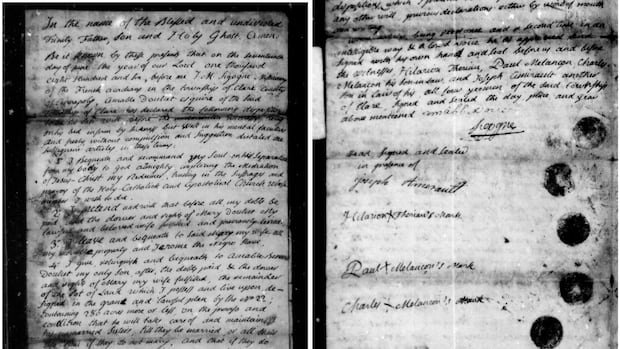

In his final days at 71 years old, Hilarion Thériault, an Acadian in the 19th century, made the unusual decision to create a will. This was uncommon among Acadians of the time due to the historical loss of property following the Acadian deportation. Many Acadians, who were Roman Catholics, faced challenges in owning property until the 1780s. Despite the struggles for land titles, Thériault, in his will, expressed his readiness for his passing.
Colby Gaudet, a post-doctoral fellow at Dalhousie University, delved into Thériault’s will and 23 others from Clare, N.S., to explore how families managed legal and religious customs during times of bereavement. Gaudet noted that the wills reflected both resistance and adherence to existing Anglophone property norms, while emphasizing the Roman Catholic faith.
Thériault’s will included provisions for debt repayment, reparations for any wrongdoings, and ensuring peace for his family. Maurice Basque, a historian at Université de Moncton, highlighted that these wills were created amidst social ostracism of Acadians, stemming from the historical events of the Acadian deportation.
The wills shed light on the challenges faced by Acadians, including limitations in holding positions of power due to oath tests that conflicted with their Catholic beliefs. Gaudet highlighted the language barrier Acadians faced, as all county judges overseeing wills were Anglo-Protestant, necessitating wills to be written in a language unfamiliar to many Acadians.
The study of these wills revealed the staunch Catholicism prevalent in the Acadian community, with many wills invoking specific Catholic details such as references to saints and the Virgin Mary. Additionally, the wills provided insights into the relationships between Acadians and Black individuals in the community, uncovering historical complexities and connections.
Gaudet’s research underscored the unique cultural and religious dynamics embedded in the wills left behind by Acadian community leaders, showcasing their unapologetic Catholic identity and values. The wills served as testaments to the enduring faith and traditions upheld by Acadians during challenging times.