
An overloaded ferry tragically capsized on Lake Kariba in Zimbabwe, resulting in the loss of at least 15 lives, with 27 individuals still unaccounted for, according to the national disaster management agency. The agency reported that 77 people were successfully rescued and transported to an island on the lake.
Zimbabwe’s Civil Protection Unit mentioned that based on ticket sales records, there were 114 adult passengers on board the ferry, but there could have been additional children who were not included in the count due to being below the ticketing age. Additionally, the statement highlighted the presence of five crew members on the vessel, which had a maximum capacity of 90 passengers.
Mutsa Murombedzi, a local Member of Parliament, shared a video showing individuals on the shore waving at the aging ferry as it embarked on its journey. The ferry served as a vital mode of transport for rural communities traveling along the lake to the town of Kariba. Concerns were raised in the video about the ferry’s ability to withstand rough waves on the lake.
Earlier reports indicated that Zimbabwean police were conducting a rescue operation following the incident. Footage released by the Zimbabwe Broadcasting Corporation (ZBC) depicted speedboats approaching an overturned vessel on the lake, with a helicopter providing aerial support.
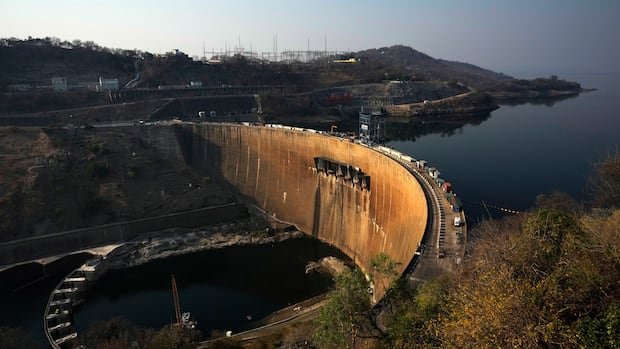
Lake Kariba, situated on the border between Zimbabwe and Zambia in southern Africa, is renowned as the largest man-made lake globally in terms of volume. The lake was formed in the late 1950s and early 1960s through the construction of a dam wall that obstructed the Zambezi River, leading to the gradual filling of a valley and the creation of a vast lake spanning over 200 kilometers in length and up to 40 kilometers in width at certain points. The official border between Zimbabwe and Zambia runs through the center of Lake Kariba, signifying the shared ownership of this significant water body.