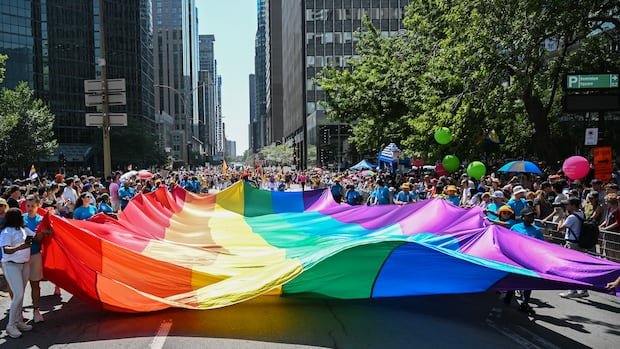

As Quebec celebrates pride month, political candidates from diverse sexual and gender backgrounds participating in the upcoming provincial election are raising concerns about a surge in hateful messages directed at them. Québec solidaire is currently facing an unprecedented wave of online hate targeting its 2SLGBTQ+ candidates.
Roxane Milot, the party president and a candidate in Montreal, expressed worry about the alarming level of online violence towards marginalized candidates, emphasizing the need for caution in political discourse. Milot, who identifies as bisexual, highlighted the discouraging impact of such attacks on individuals from diverse backgrounds considering a career in politics.
Acknowledging the escalating situation, Milot revealed her personal experience of being targeted by hateful messages and online trolls. The party also made headlines when one of its candidates, Vanessa Durand, withdrew after making derogatory comments against Parti Québécois supporters from the 2SLGBTQ+ community. Durand later apologized and retracted her candidacy.
Another candidate, Philippe Schnobb, a Parti Québécois contender, disclosed receiving homophobic hate messages, including threats, since his entry into politics earlier this year. Schnobb, who identifies with the sexual and gender diverse community, emphasized the need to address such intolerant behavior, sharing an example of a threatening comment he received on social media.
Despite facing discriminatory remarks, Schnobb opted not to pursue legal action at this time, urging for a respectful and civil discourse leading up to the election. Liberal Leader Charles Milliard, who is openly gay, emphasized the importance of inclusivity in politics and condemned homophobic comments directed at him on the International Day Against Homophobia and Transphobia.
Philip Laflamme, a senior adviser for content and communications at the Liberal party, highlighted the prevalence of homophobic and transphobic insults across all major political parties. The issue extends beyond candidates from sexual and gender diverse backgrounds, affecting individuals affiliated with parties led by openly gay leaders.
Efforts to address online violence include closely monitoring candidates’ social media accounts and providing support structures within parties. Quebec Conservative Party Leader Éric Duhaime, who is openly gay, acknowledged receiving hateful comments online but refrained from giving them undue attention. Parties like Québec solidaire and the Liberals have established support groups and training sessions to assist candidates in handling hostile situations effectively.