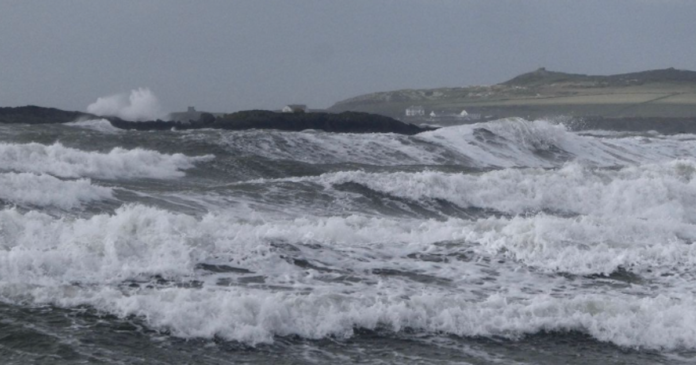

An earthquake has been detected off the northwest coast of Wales, according to the British Geological Survey. The 0.4-magnitude tremor originated 5.6 miles southwest of Rhosneigr in the Irish Sea and occurred at 7.55am on Sunday, November 2, at a depth of 17km.
Northwest Wales experiences frequent seismic activity, with recent tremors including a 0.2-magnitude event near Amlwch in July and a more significant 1.6 magnitude quake in Llwyndyrus on the Llŷn Peninsula in August. The British Geological Survey noted no reported impacts on land from the latest tremor.
In September, a 0.7 tremor was recorded in Bannau Brycheiniog National Park at Llangyndir, highlighting active seismicity in Powys, where at least six tremors have been documented in the past three months.
A minor earthquake of 3.3 magnitude was felt in parts of Perth and Kinross, Scotland, in late October. The quake, which began at 7.25am, had its epicenter in Pubil in the Glen Lyon region. Residents and travelers in the area reported the event to the Volcano Discovery website.
Recent solar activity has raised interest in potential links to seismic events. Scientists are exploring the impact of geomagnetic storms on Earth’s magnetosphere and potential connections to earthquake occurrences. Studies have suggested a possible relationship between sunspot activity and seismic patterns, indicating a role for solar heating in influencing underground water movement and rock properties that may contribute to earthquake activity.
While solar activity is not considered the primary cause of earthquakes, integrating solar data into Earth temperature models could enhance the accuracy of earthquake predictions in the future.